Astra vs Fable: Building Complex 3D Scenes with V2Fun AI 3D Skill
This article explores how AI agents Astra and Fable recreate a detailed 3D scene from a single reference image using the V2Fun AI 3D Skill.
Astra vs Fable: Building Complex 3D Scenes with V2Fun AI 3D Skill
How well can AI agents recreate a complex 3D scene from a single reference image?
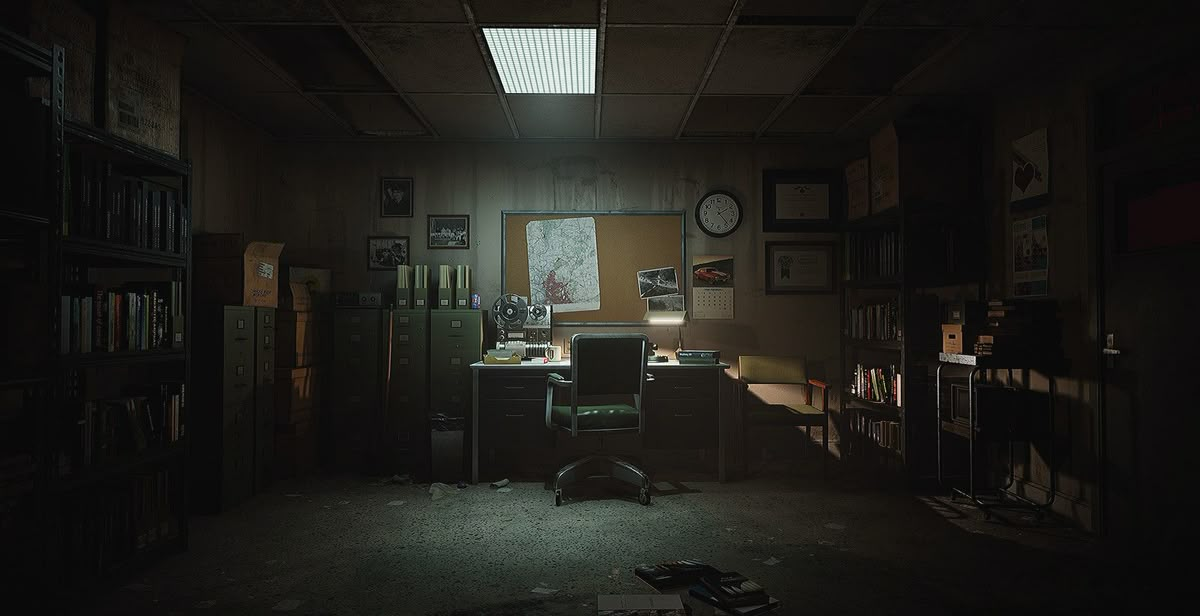
To find out, we gave Astra and Fable the same image of a cluttered office and asked them to build it using the same version of the V2Fun AI 3D Skill. The scene included furniture, electronic equipment, wall decorations, and dozens of smaller objects. Each agent had to break down the scene, generate the necessary 3D assets, and assemble them in Three.js.
Both agents completed the scene, but took noticeably different approaches to modeling and assembly.
The Test: One Scene, Two Workflows
Both agents used the V2Fun AI 3D Skill to generate 3D assets, with Three.js handling the final scene assembly.
Each workflow produced a GLB file, source code, and screenshots for inspection. The task allowed a combination of AI-generated assets and procedural geometry.
Fable used a hybrid modeling approach, combining AI-generated objects with geometry built in code. Astra took a different route, extending V2Fun generation to nearly every part of the scene.
Two Approaches to Building the Same Office
Fable: Complex Assets with V2Fun, Simple Structures with Three.js
Fable divided the office into several groups: room structure, main furniture, equipment, wall decorations, and smaller objects.
It used V2Fun to generate objects with more complex shapes, including desks, office chairs, filing cabinets, and a tape recorder. Walls, floors, doors, ceiling panels, and simpler items such as papers and boxes were built procedurally with Three.js.
In total, Fable generated 14 categories of AI assets, placed across 20 instances, then combined them with procedural geometry to complete the room.
Fable also spent time optimizing the generated models. By reducing polygon counts and resizing textures, it brought the source assets from roughly 7 million triangles down to about 820,000, a reduction of 88.3%. The final GLB file was approximately 41.1 MB.
This approach kept the scene relatively lightweight. Regular structures could be adjusted directly through code, while more detailed furniture benefited from V2Fun's 3D generation capabilities. Fable also kept both the original and optimized assets, making further edits and replacements easier.
The trade-off was visible in the finished scene. Some procedurally modeled props looked much simpler than the AI-generated furniture, leaving noticeable differences in detail. Fable also stretched certain furniture models to fit their positions, which affected their proportions.
Astra: Generating the Entire Scene with V2Fun
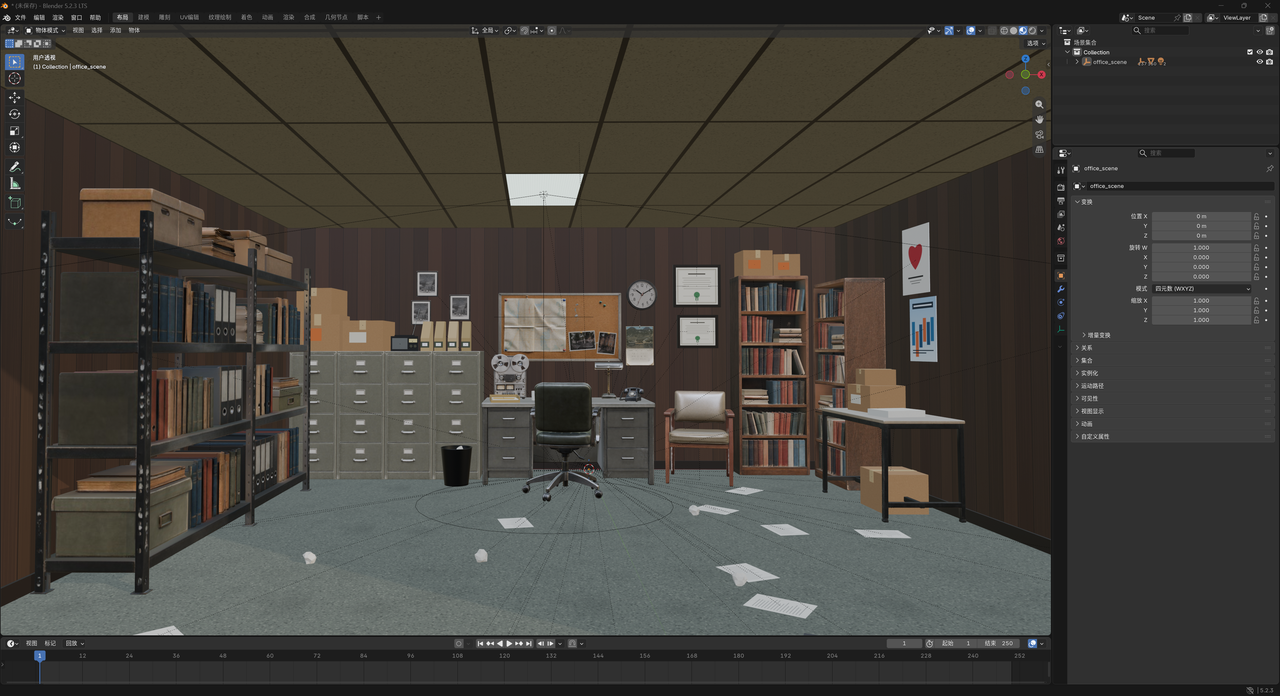
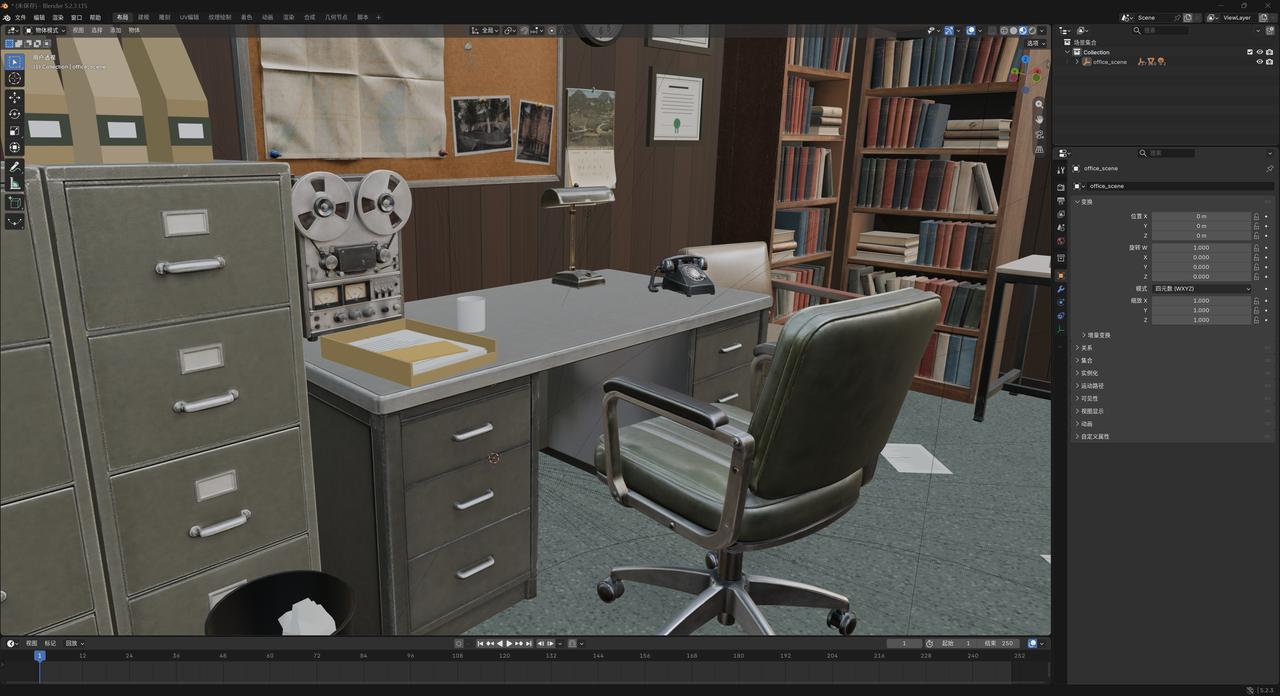
Astra took a more generation-heavy approach. It divided the office into 26 categories of source assets, sending everything from walls and ceiling panels to furniture, equipment, decorations, and small objects through V2Fun.
These assets were arranged into 62 instances, with Three.js used to adjust their scale, position, orientation, and materials before exporting the scene.
Astra also put more work into local assembly. It used mesh surfaces to position objects on furniture and other supporting structures, adjusted the direction of the doorway and ceiling, and corrected several spacing and occlusion issues. The project records included 47 object contact relationships.
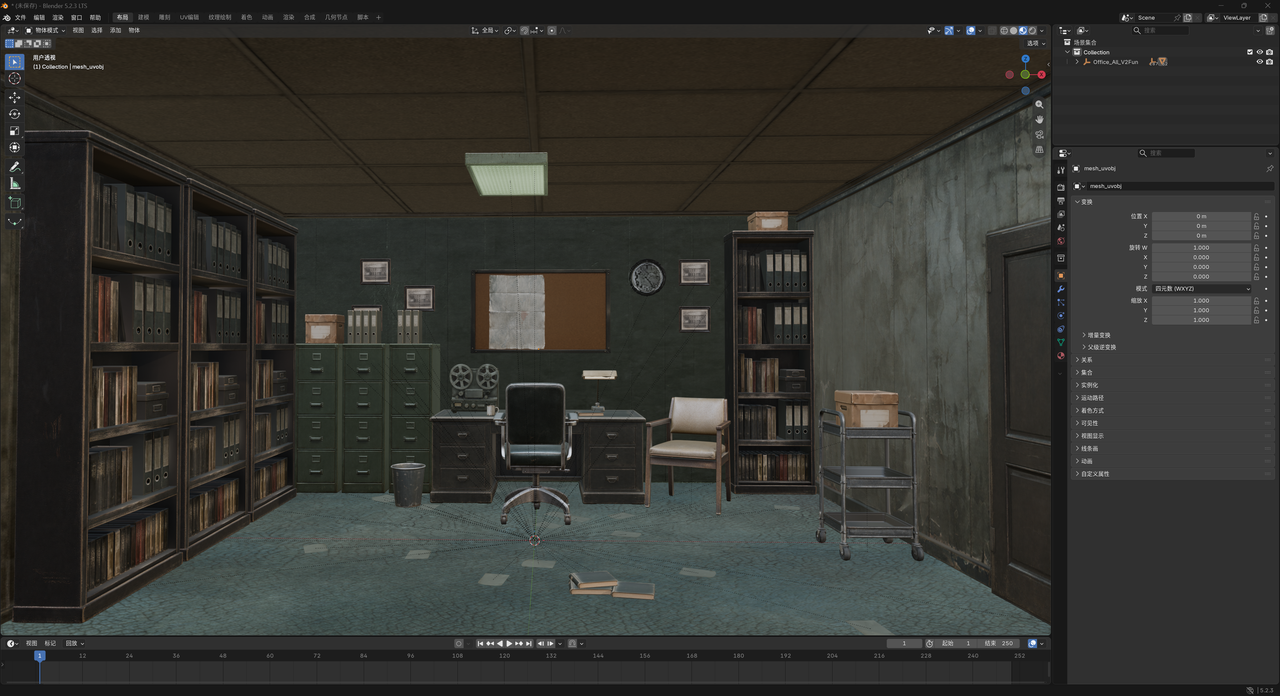
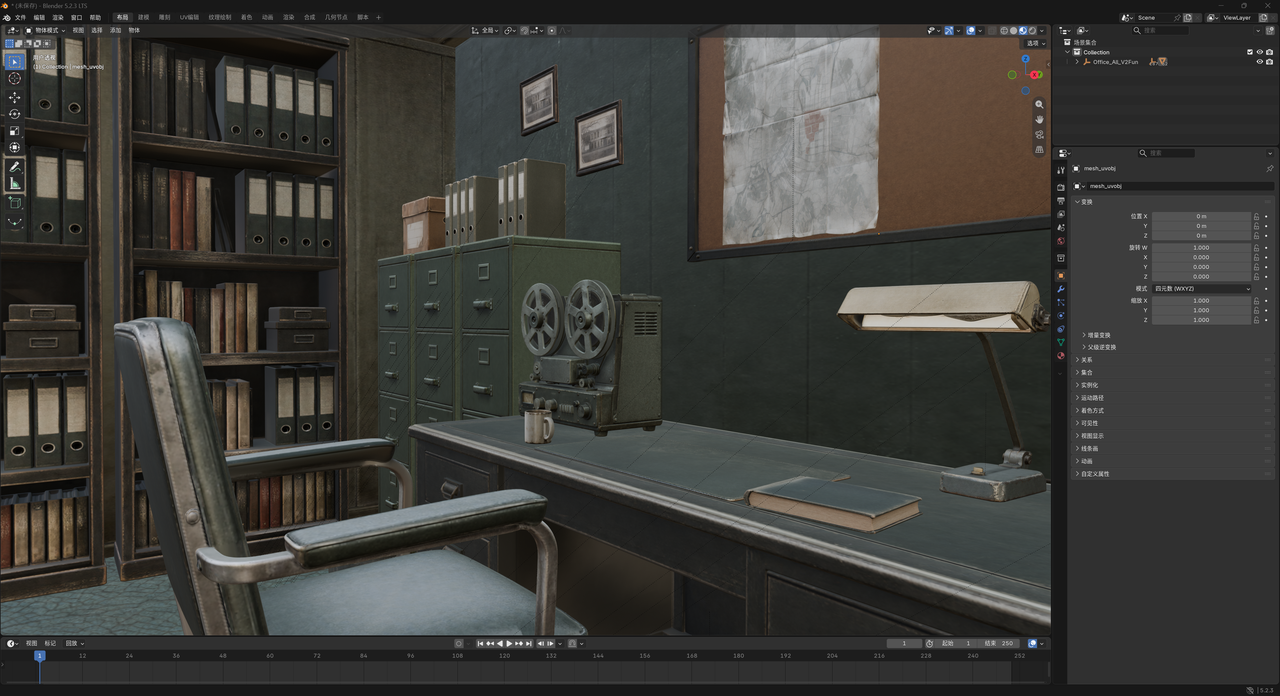
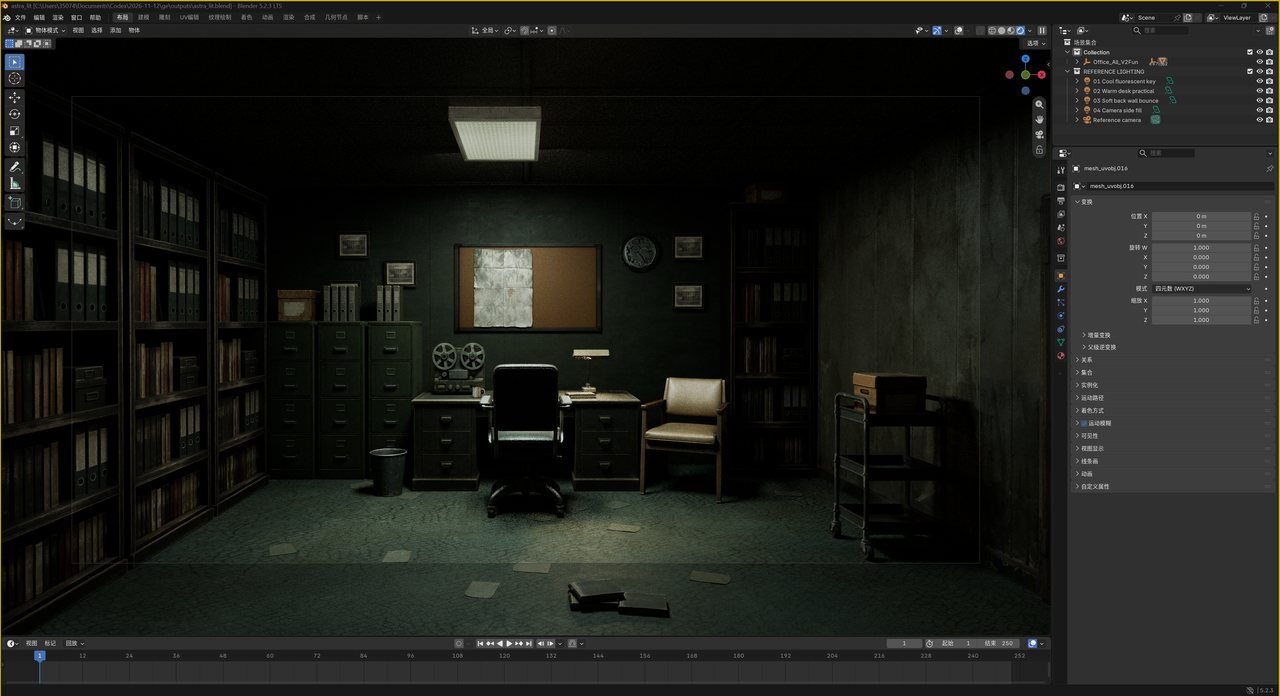
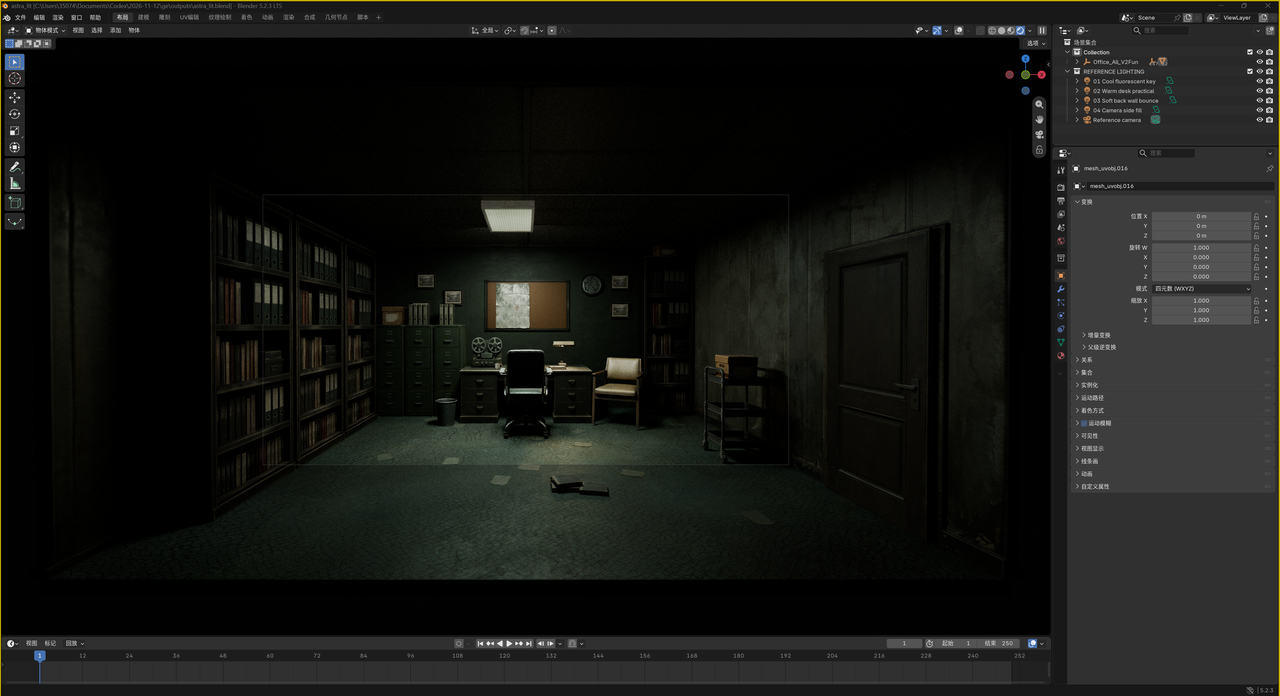
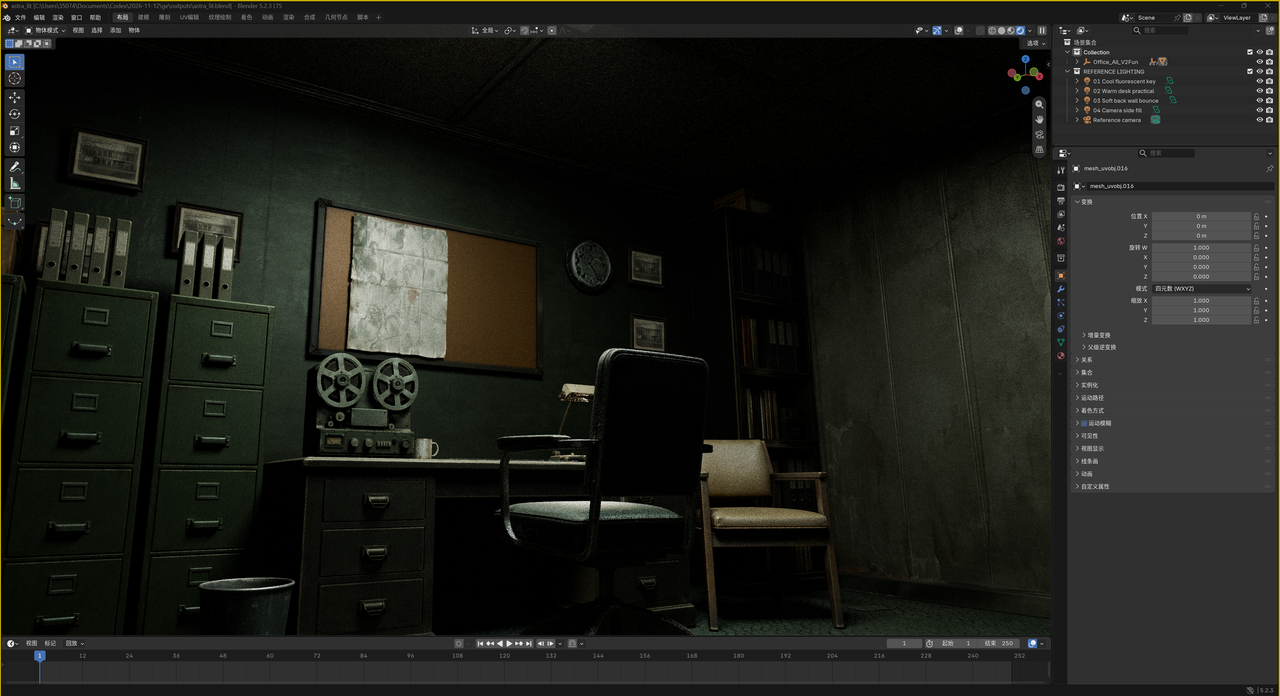
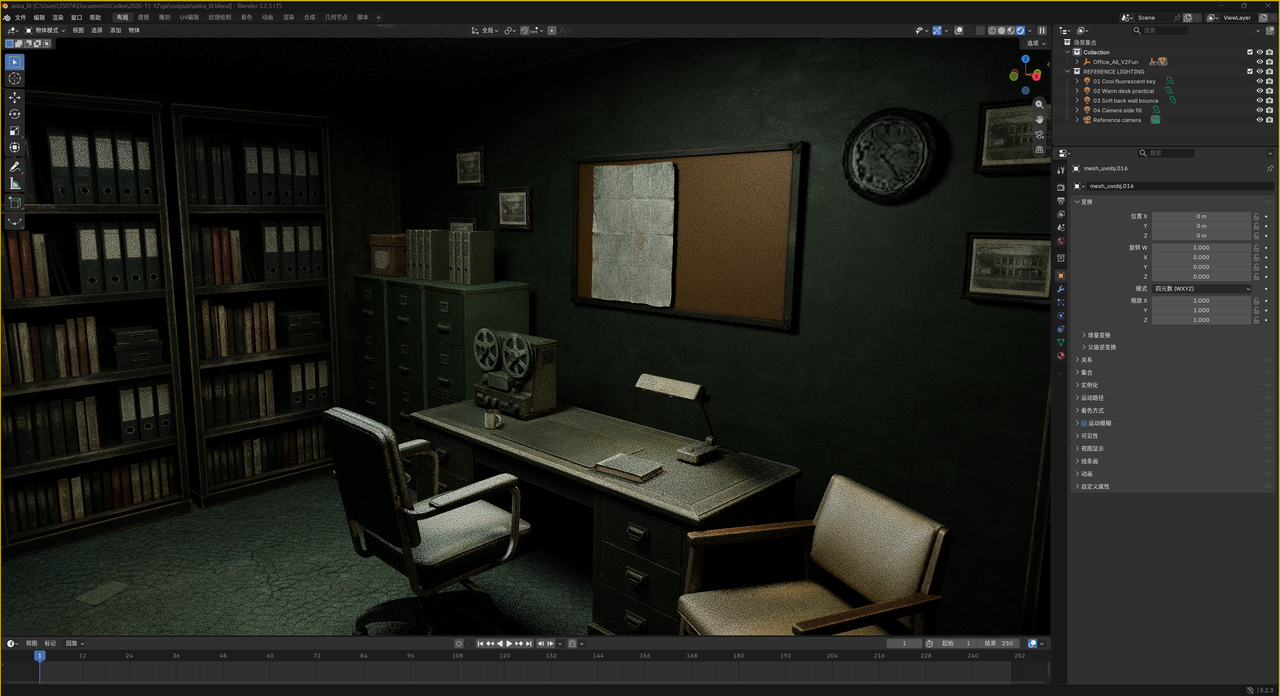
The resulting scene had a more consistent aged appearance. Its muted green palette and worn surfaces also came closer to the original reference.
The cost was a much heavier scene. Even simple structures such as walls and ceiling panels were generated as detailed meshes. Without a comparable polygon-reduction pass, Astra's final GLB reached approximately 432.6 MB, with around 31 million triangles when placed instances were counted.
The additional geometry preserved more detail, but some regular structures still showed shape inaccuracies. Repeated objects and uneven spacing were also visible in the final scene.
Astra vs Fable: A Look at the Numbers
Here is how the two final projects compare.
| Metric | Fable + V2Fun | Astra + V2Fun |
|---|---|---|
| Modeling approach | Hybrid AI + procedural | All components AI-generated |
| AI asset categories | 14 | 26 |
| Placed AI asset instances | 20 | 62 |
| Final GLB size | 41.1 MB | 432.6 MB |
| Unique triangles | Approx. 823K | Approx. 13M |
| Triangles including instances | Approx. 1.13M | Approx. 31M |
| Asset optimization | Polygon reduction, texture resizing | High-density meshes largely retained |
| Assembly approach | Parameter-based placement and validation | Mesh-surface positioning and contact adjustments |
The figures come from the final GLB files and project records. Instanced triangle counts include repeated placements and should not be treated as actual per-frame rendering counts. The two workflows also differed in generation scope, so file size, asset counts, and recorded time are not directly comparable measures of overall agent performance.
Fable produced a much smaller, more manageable project. Its combination of procedural modeling and asset optimization helped keep the file size down while leaving room for further adjustments.
Astra generated more individual assets and spent more effort refining their placement. Its scene retained considerably more geometry, with higher storage and processing demands.
File size is only one part of the picture, though. Let's look at how closely each result matches the original office.
| Reference Image | Fable | Astra |
|---|---|---|
 |  |  |
Comparing the Final 3D Scenes
Geometry and Detail: More Detail, Different Trade-offs
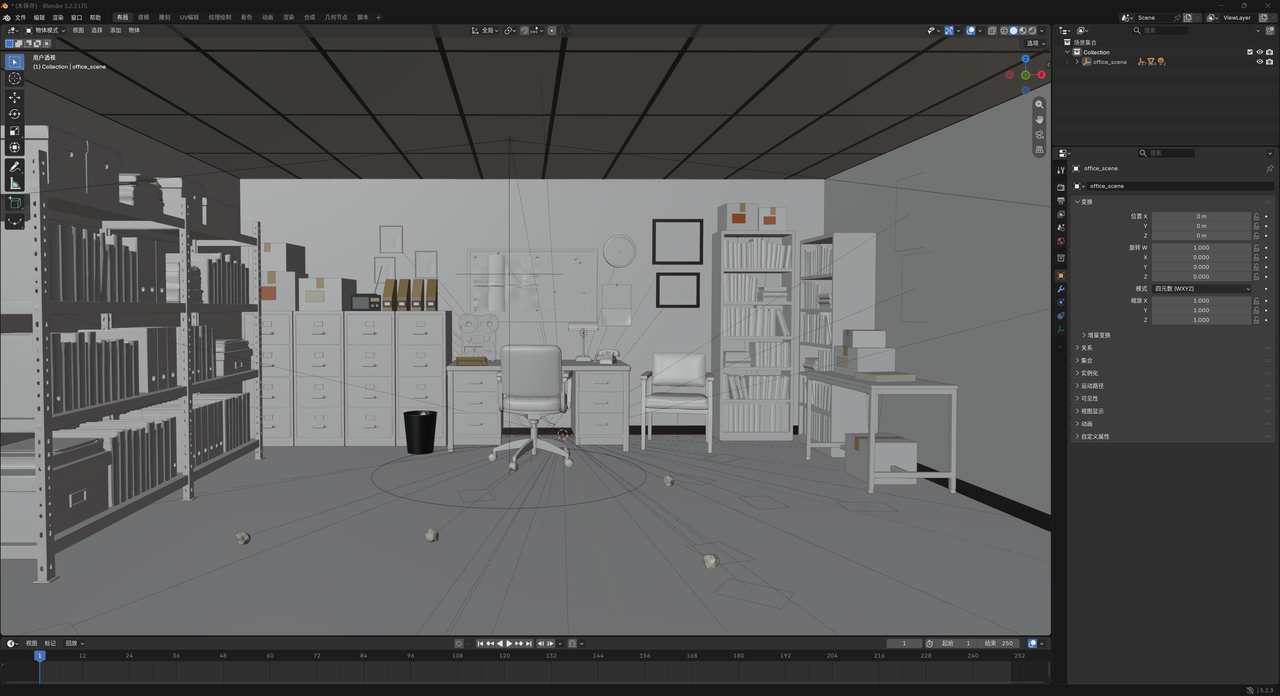
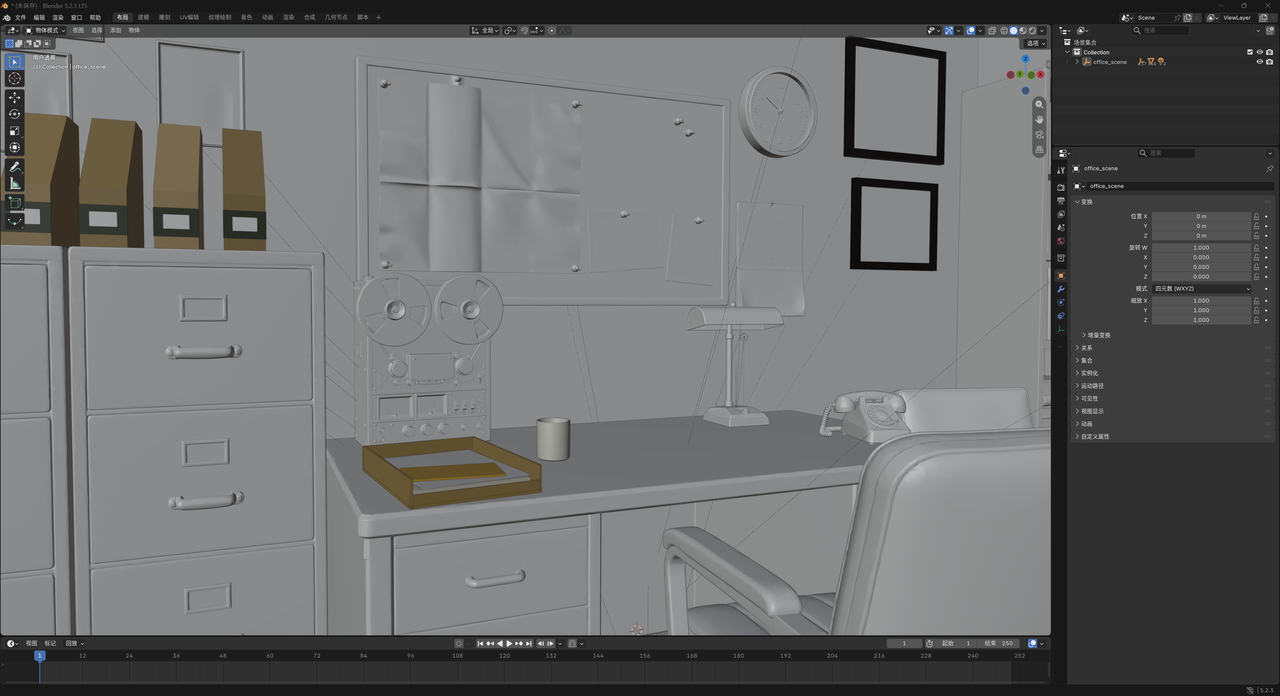
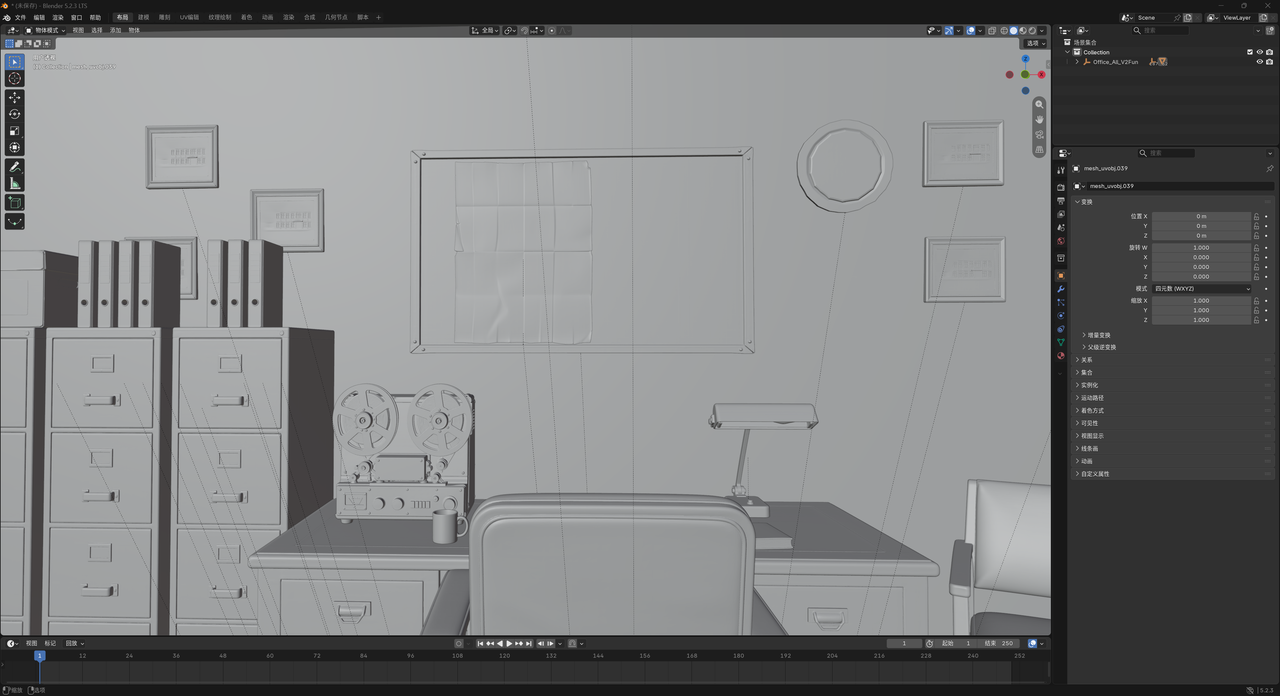
Looking at the untextured models, Fable captured the main shapes of the desks, chairs, and bookshelves reasonably well. Some smaller objects were simplified, however, and a few areas showed merged geometry or uneven detail.
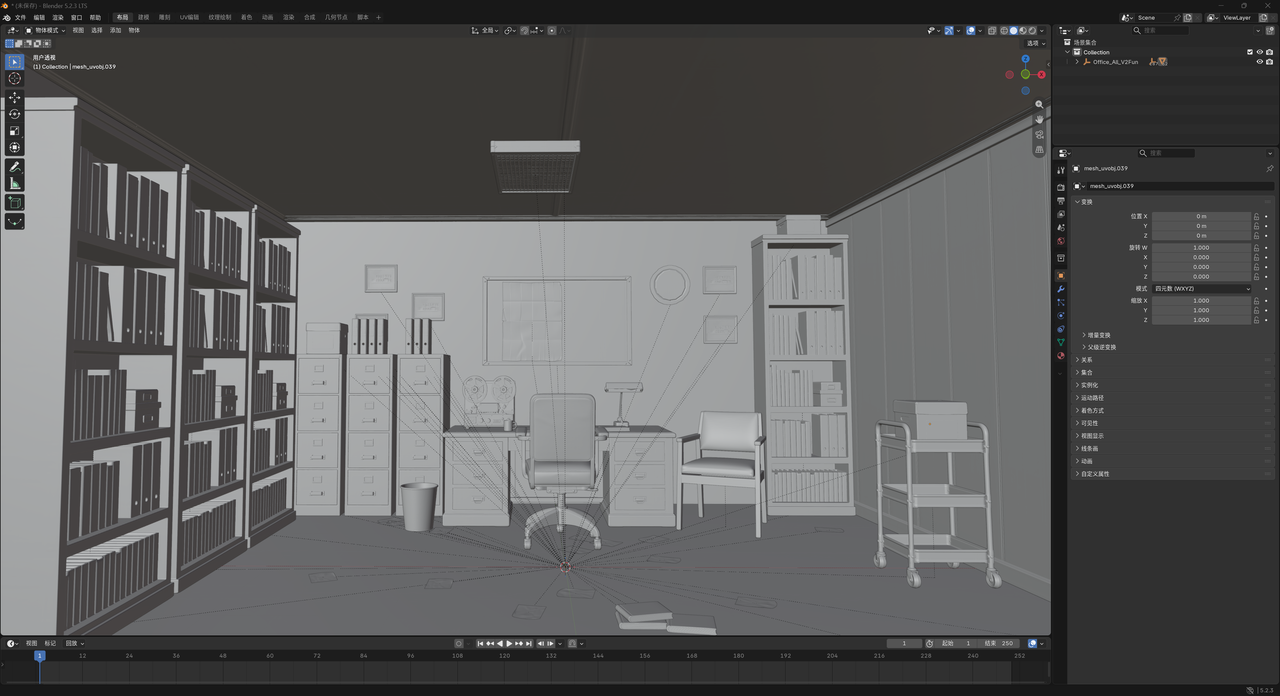
Astra's scene contained more geometric detail across both furniture and smaller props. Still, several hard-edged structures appeared slightly softened, and some shapes were less accurate than their level of detail might suggest.
Fable's optimization made the scene easier to manage, while Astra retained more of the generated geometry. Neither approach completely resolved the shape and proportion issues visible in individual assets.
| Fable | Astra |
|---|---|
 |  |
 |  |
Materials and Atmosphere; Astra Comes Closer to the Reference
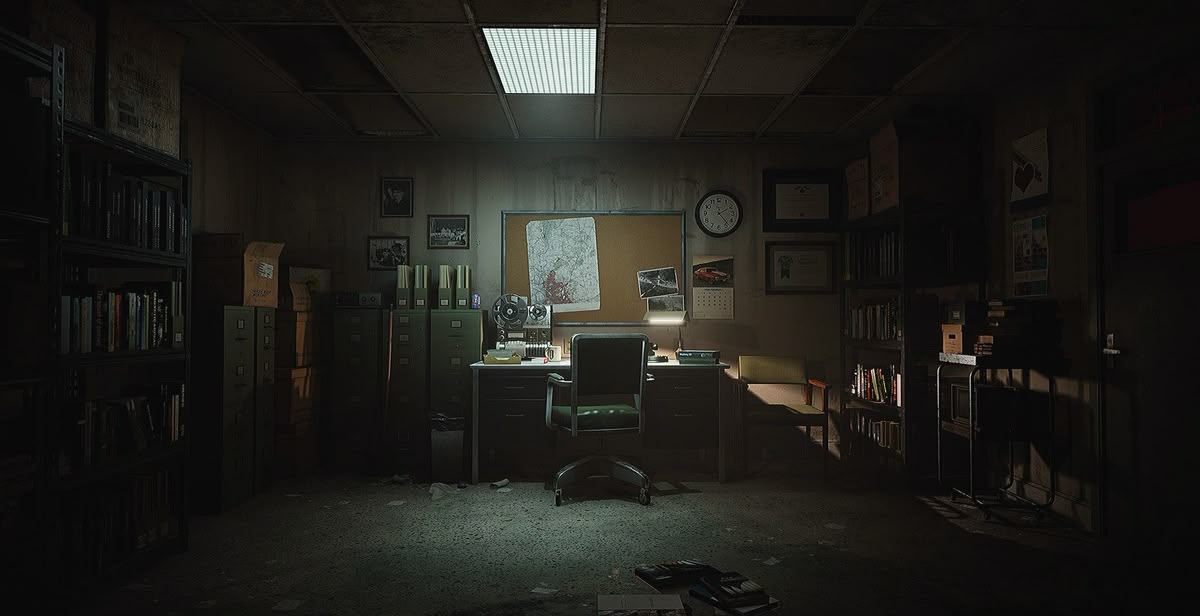
The reference office has a distinctive look: muted green tones, worn furniture, aged walls, and signs of long-term use.
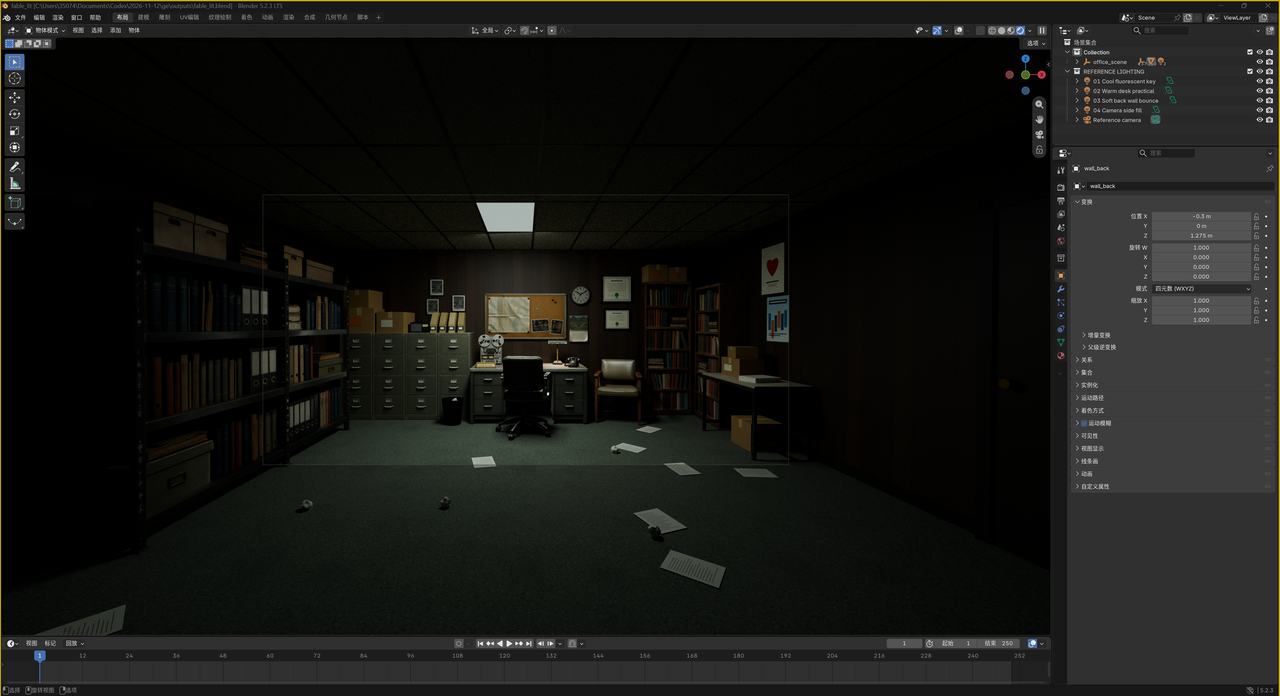
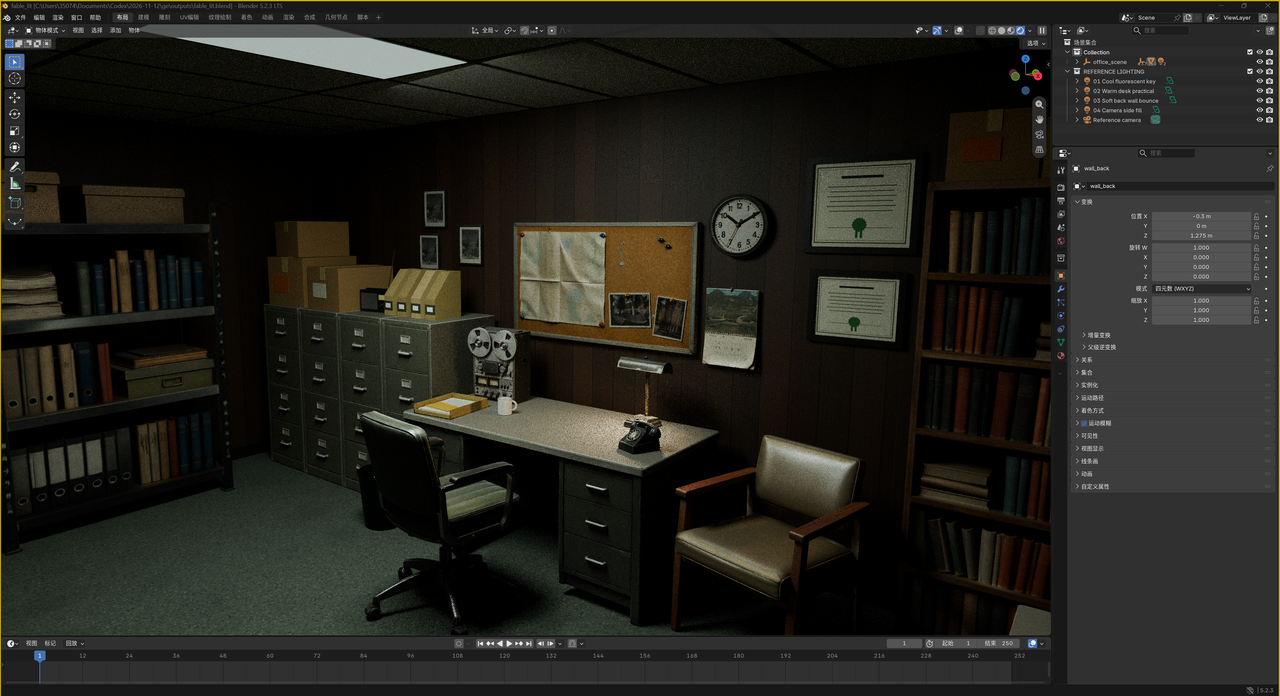
Astra preserved more of that atmosphere. Its materials and weathering were relatively consistent across the room, giving the scene a closer resemblance to the reference. Some surfaces still relied heavily on color and dirt patterns to suggest age, with limited variation in roughness and reflections.
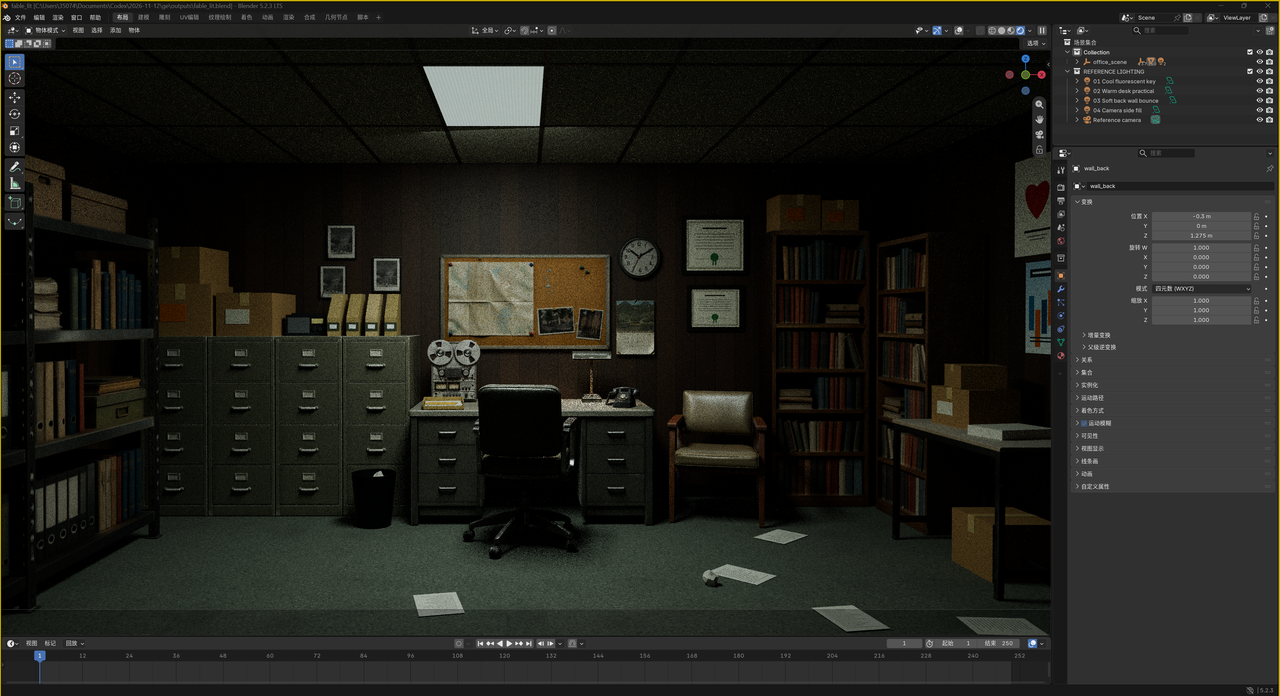
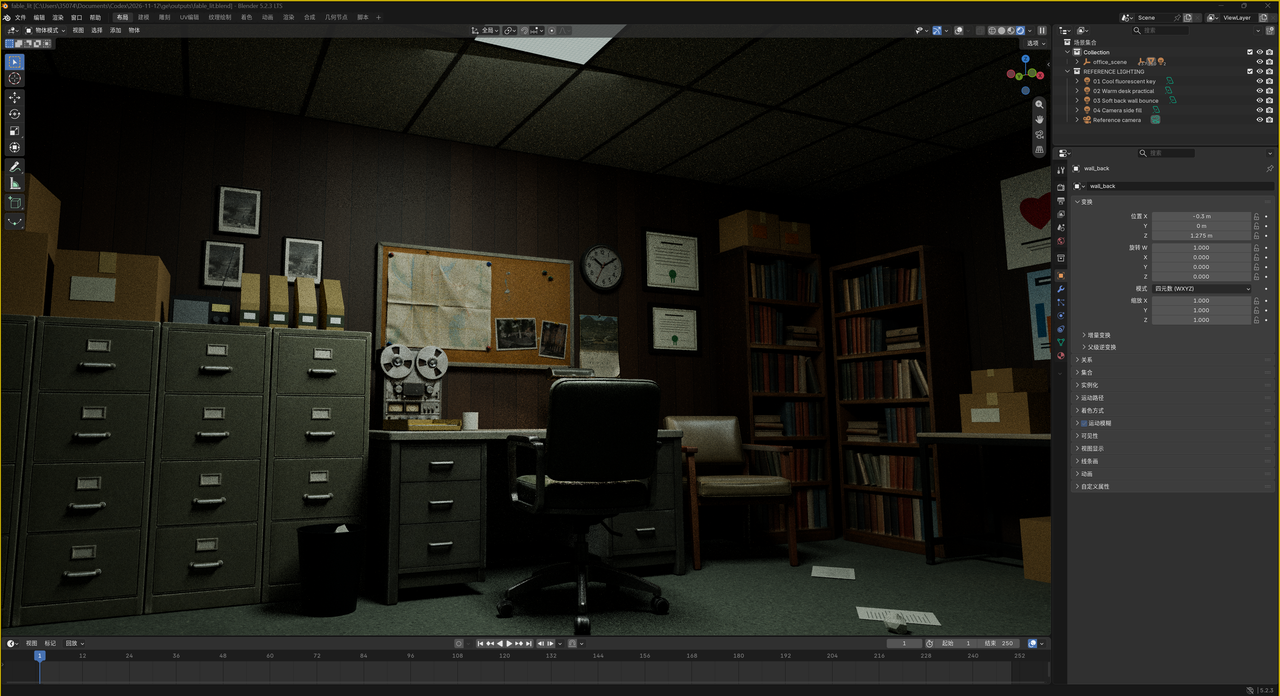
Fable's materials were clear enough to distinguish the main objects, and the scene had some variation between warm and cool tones. But several surfaces looked comparatively new. The overall result felt more like an ordinary working office, with less of the aged, enclosed atmosphere seen in the original.
| Fable | Astra |
|---|---|
 |  |
 |  |
 |  |
Scene Layout: The Furniture Is There, but the Room Feels Different
Both agents managed to identify the main furniture and arrange it into a recognizable office. Desks, shelves, filing cabinets, and other major objects were generally placed in the expected areas.
The differences become clearer when comparing the overall layout with the reference.
The original room feels crowded, with furniture and smaller objects placed close together. Foreground objects partly block the view of those behind them, creating a stronger sense of depth and a tighter interior.
Both reconstructed scenes look more spacious and orderly.
Fable stretched or repositioned some furniture to make the arrangement work, changing a few proportions along the way. Astra made more local corrections to object placement and contact points, but the overall spacing was still looser than in the reference.
The completed scenes can be opened, inspected, and edited. Their layouts, however, still need work to better match the original composition and spatial relationships.
What Does This Mean for AI 3D Workflows?
The test shows two workable ways to build a complex 3D scene with an AI agent and V2Fun.
Fable assigned complex objects to V2Fun, used Three.js for regular structures, and optimized assets before final assembly. The result was a lighter project with a more straightforward path for further editing.
Astra relied more extensively on V2Fun-generated assets and made additional adjustments during assembly. Its final scene had a more consistent visual style and more detailed local placement, though the geometry remained considerably heavier.
Both workflows produced complete office scenes. Both also left visible differences in furniture proportions, object spacing, occlusion, and overall composition.
Improving these results will require better checks against the reference image throughout the assembly process. Room proportions and camera framing need to be established early, followed by closer adjustments to placement, occlusion, materials, and lighting.
For complex 3D projects, generating the individual assets is already a substantial part of the workflow. How those assets are organized, positioned, optimized, and revised has just as much influence on the finished scene.
To explore component-based 3D generation in your own agent workflows, visit the V2Fun AI 3D Skill page for more details.
FAQ
Can AI agents generate complete 3D scenes from a single image?
Yes. In this test, Astra and Fable both used V2Fun AI 3D Skill to generate individual assets and assemble an office scene with Three.js. Complex layouts may still require adjustments to proportions, object placement, and spatial relationships.
What does V2Fun AI 3D Skill do in this workflow?
V2Fun provides the 3D asset generation capability. The AI agent analyzes the reference, plans which assets to create, calls the generation tool, and organizes the assembled scene.
What's the difference between AI-generated and procedural 3D modeling?
AI generation is useful for objects with complex or irregular shapes. Procedural modeling works well for structures with predictable geometry, precise dimensions, or repeated patterns. Both approaches can be used together.
How did Astra and Fable approach the task differently?
Fable combined AI-generated assets with procedural geometry and optimized the models afterward. Astra generated a wider range of assets through V2Fun and spent more effort adjusting object placement and contact relationships.
Why can a generated 3D scene still look different from its reference image?
The overall appearance depends more on the individual models. Furniture proportions, spacing, occlusion, camera position, and lighting all affect how closely the finished scene matches the reference.