Fable 5.2: Turning Code into 3D Experiences
Fable 5.2 enables AI-driven creation of 3D experiences by converting visual briefs into executable code, allowing users to generate and refine interactive scenes through a text-and-image interface.
Fable 5.2 makes AI-assisted 3D interesting beyond an attractive first render: it can help turn a visual brief into code, execute tools, inspect results, and revise a project. Its documented interface accepts text and images and returns text; geometry and interactive scenes emerge through the software it operates. Model documentation.
Highlights and Evidence
The three shared sources reveal complementary perspectives. Digital Life Kazik's visual walkthrough shows a procedural harbor and an Apple Jing'an architectural experience with component visibility and lighting controls. T8star-Aix's Bilibili review includes interactive web tasks and a timed desktop-character challenge. The challenge's animation requirements should not be mistaken for independently verified deliverables.

Artificial Analysis's intelligence-index report places Fable 5.2 at 65 under maximum effort. That is a general capability measure. More directly relevant to geometry, Anthropic reports a BenchCAD 2.1 score of 83.5 with tools at maximum effort, versus 44.4 for Fable 5.1. This partial-credit score measures benchmark performance, not the percentage of assets ready for production. Official release.
How It Works: Code, Tools, and Feedback
The useful architecture here is an application workflow. The model interprets references and constraints, plans parts and behavior, writes geometry and rendering code, then uses execution feedback to repair the result. The API provides a one-million-token context window, up to 128,000 output tokens, and adaptive thinking controlled by effort settings. These accommodate extended reasoning and code context; they do not guarantee geometric correctness. API specifications.

The harbor example makes this concrete: Three.js combines procedural geometry, generated textures, water shading, lighting, and interaction. The posted debugging trace describes invalid shader calculations producing NaNs, contaminating the environment map and breaking the image. The model adds safeguards and checks views again. “One prompt” describes the creator’s initial instruction; the agent can still perform many internal edits and tool calls. Implementation walkthrough.
CAD provides another execution loop. The BenchCAD implementation runs generated Python in a sandbox and compares results against references with deterministic evaluation. Version 2.1 allows up to 60 rounds and 500,000 output tokens, including thinking. Its results therefore depend on both the model and the available tool budget. Evaluation configuration.
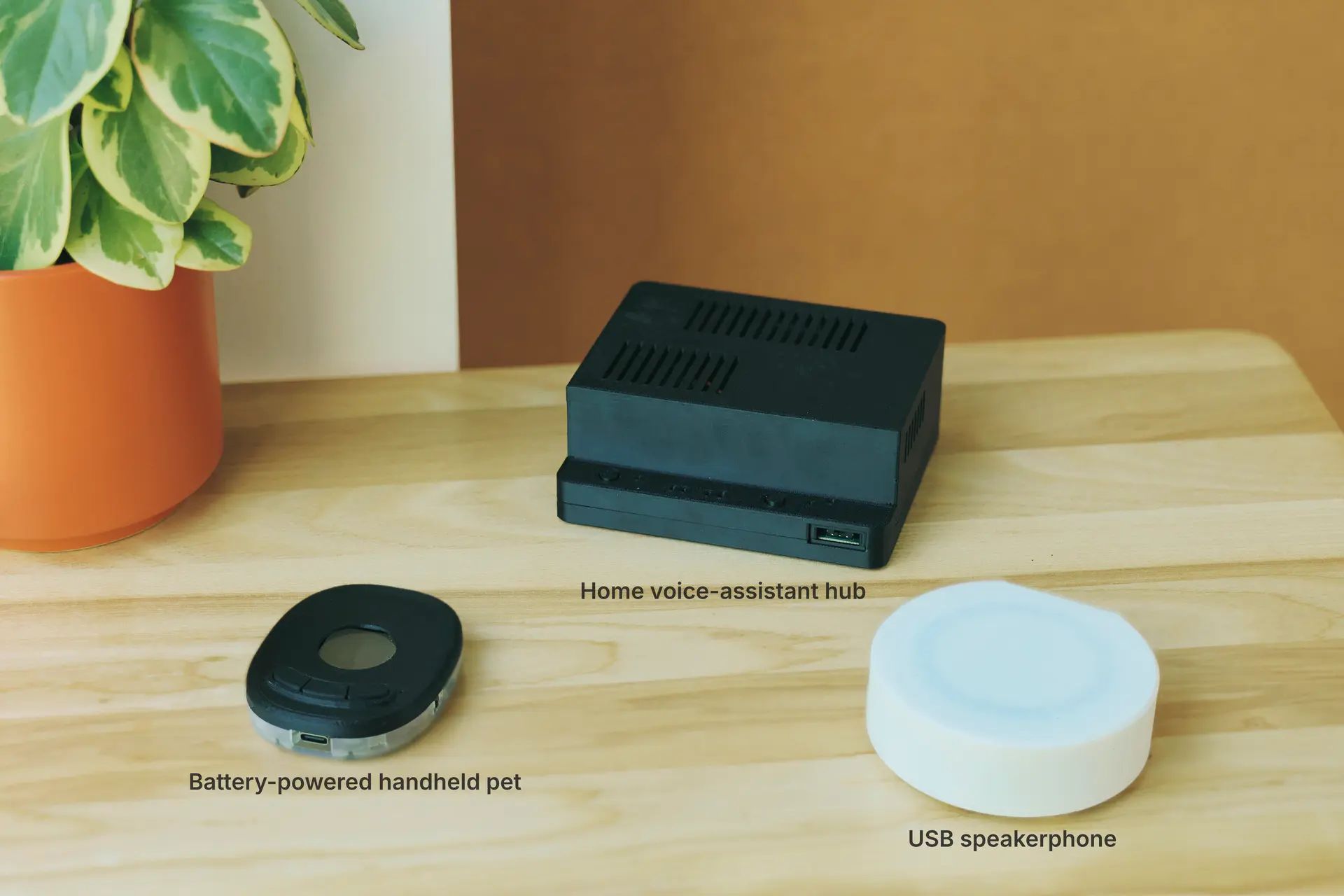
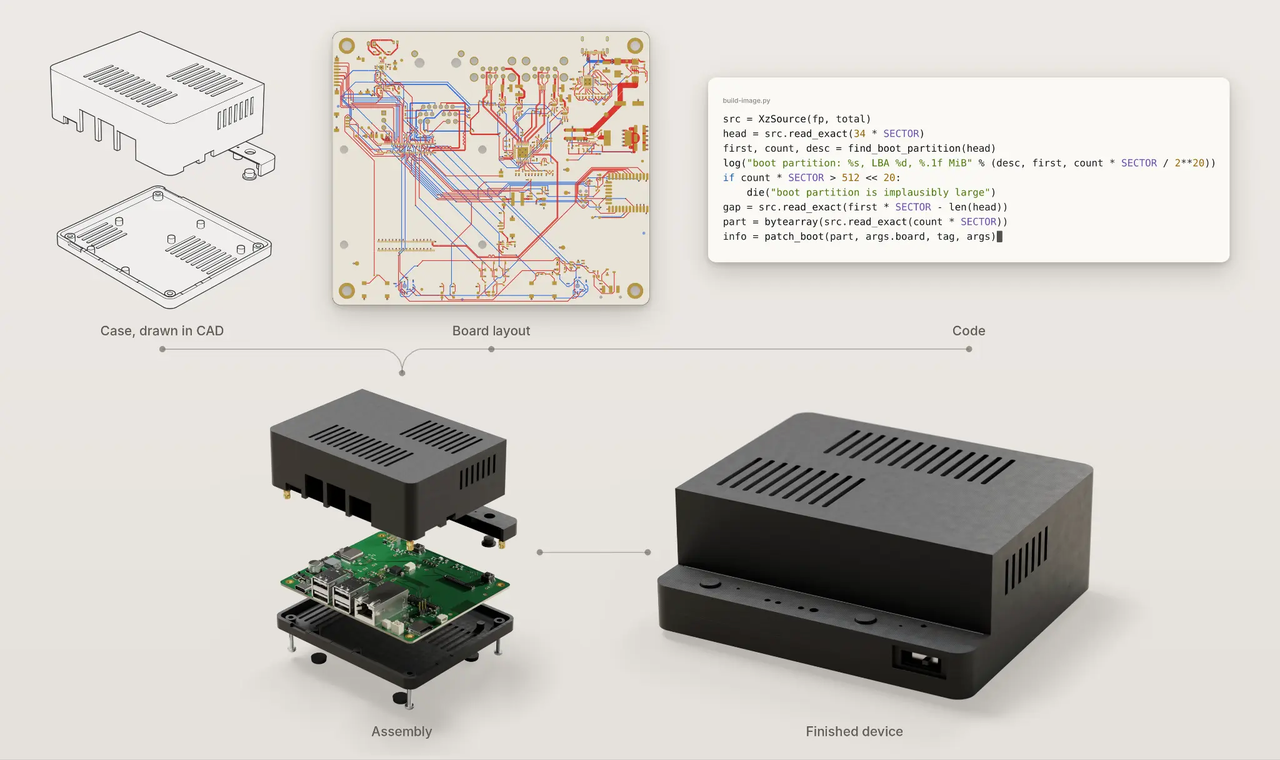
Anthropic’s electronics demonstration goes beyond screenshots: the model develops enclosures alongside PCBs and firmware, while human engineers fabricate and test the prototypes. In one assembly problem, it writes collision checks and identifies a 25-degree tilt needed to insert a board. This illustrates why a useful 3D agent must reason about assembly and test its geometry. Official engineering case.
Applications and a Possible V2Fun Workflow
These examples support architectural explainers, interactive product presentations, and game prototypes as promising uses. V2Fun offers a concrete complementary workflow: its public v2fun-ai-3d skill combines procedural modeling for regular structures with generated meshes for organic forms, assembles them in Three.js, and delivers GLB assets plus editable source after inspection.
A proposed integration could assign Fable scene planning, procedural code, and visual review, while V2Fun supplies specialist asset-generation and assembly steps. Shared scale, axes, anchors, materials, and exported-file checks would connect the stages. This is an application proposal based on the documented workflows, not an announced Fable integration. Exact CAD, automatic rigging, and certified print preparation remain separate requirements.
Availability, Limits, and Next Steps
Standard API pricing is $8 per million input tokens and $40 per million output tokens. Lower token prices do not automatically mean cheaper projects: Artificial Analysis lists roughly $26.54 per benchmark task at maximum effort. That benchmark average is not a 3D-project quote. Pricing; cost comparison.
Creator demonstrations establish possibilities, not repeatable production acceptance. The engineering prototypes still lack full electrical, thermal, and certification validation. Anthropic explicitly identifies denser and more complex boards, simulation, and measurements from finished devices as further work; it does not establish a roadmap for a native 3D asset model. Study boundaries and future work.
FAQ
Does Fable 5.2 directly output a finished 3D asset?
The API returns text. A tool environment must execute generated code, create geometry, export files, and validate them; the resulting asset depends on that workflow. [Source](https://platform.claude.com/docs/en/models/fable-5-2/overview).
Does one prompt mean there is no iteration?
No. The harbor walkthrough includes debugging and repeated visual checks after the initial instruction. Human prompting and internal agent iteration are different measures. [Source](https://xhslink.cn/o/4nSOv1wSnIl).
Where could V2Fun add value?
Its documented hybrid route combines procedural parts and generated meshes, then handles assembly and GLB delivery. Fable could help plan and code this workflow, but that integration remains a proposal. [Source](https://github.com/V2Fun-Research/v2fun-ai-3d).


