AnyMachine: Building 3D Machines That Move
AnyMachine demonstrates how an AI agent builds articulated 3D machines in Blender, focusing on preserving parts, joint axes, and animation controls. It includes six experiments like the Stilt Walker with 160 parts.
Highlights and Results
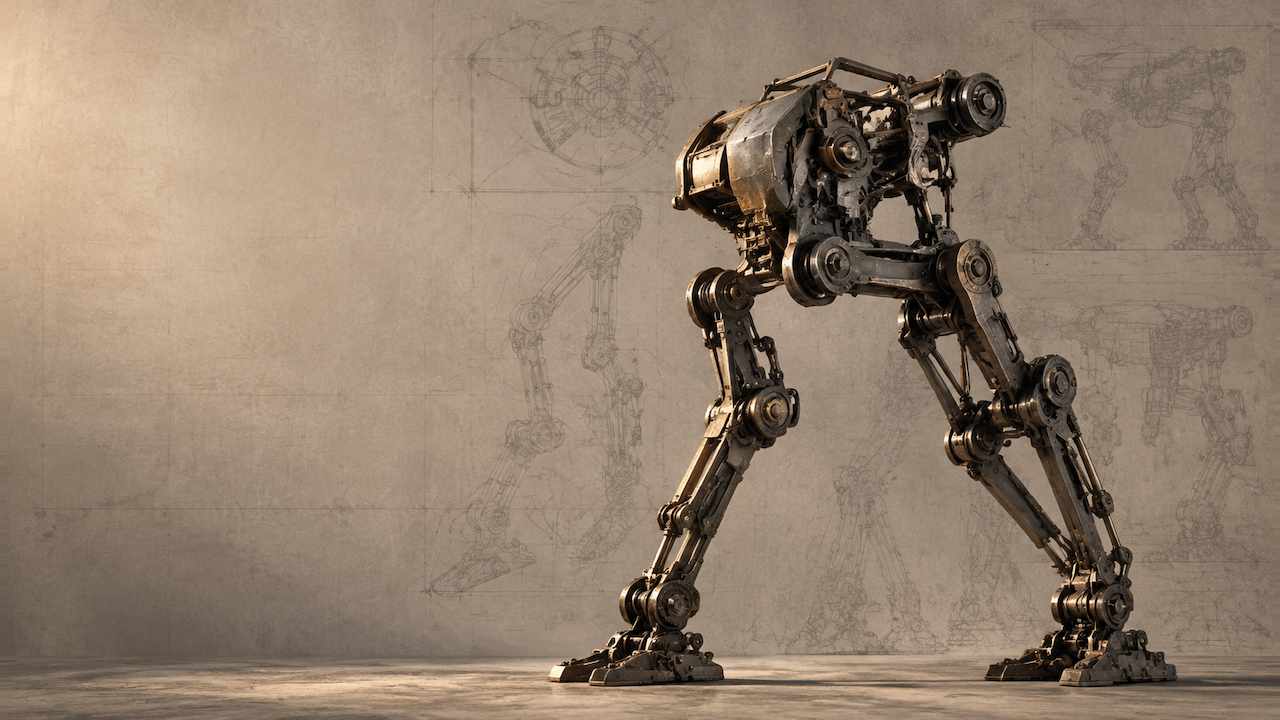
AnyMachine explores how an agent can build articulated 3D objects in Blender while preserving explicit parts, joint axes and animation controls. Its repository contains six experiments, not a general-purpose hosted service. People choose designs and approve stages; the agent writes and revises construction scripts. Source
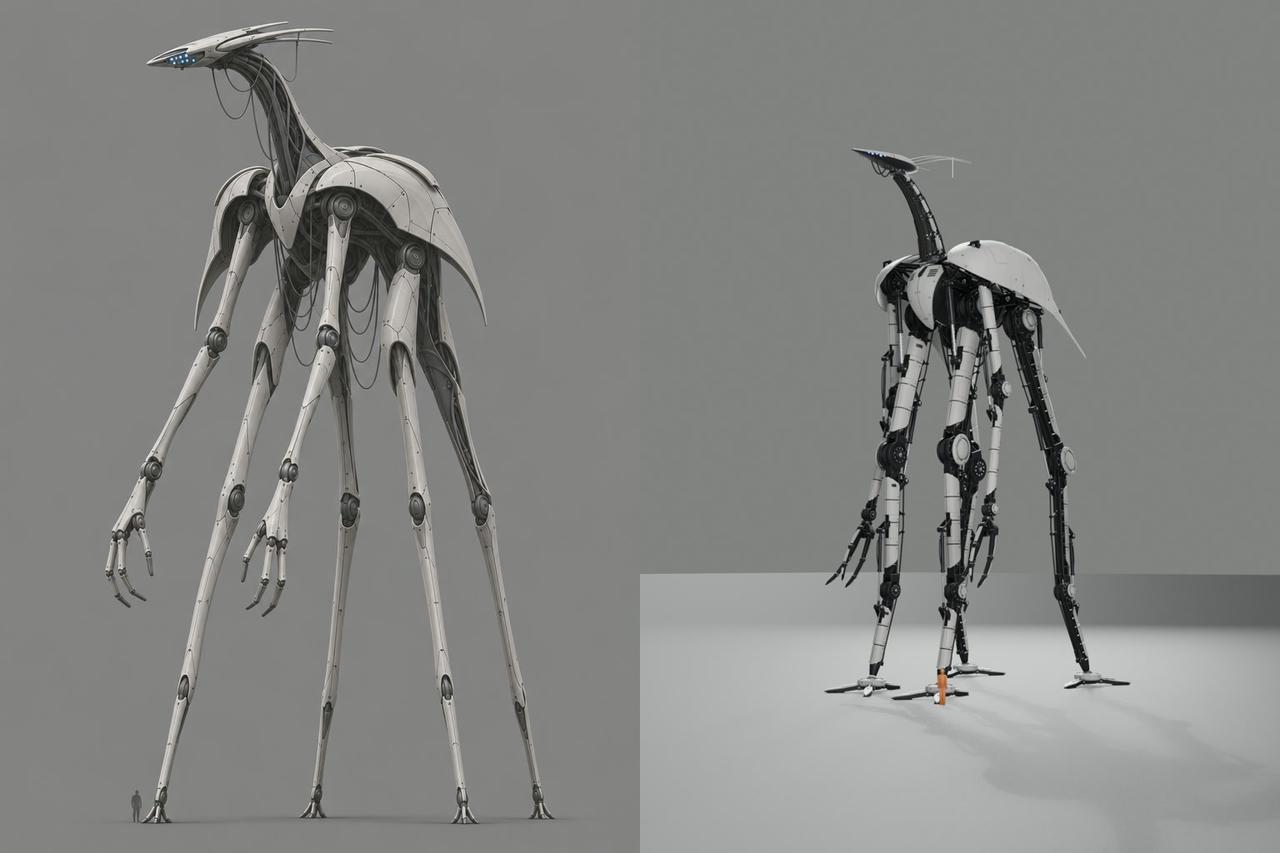
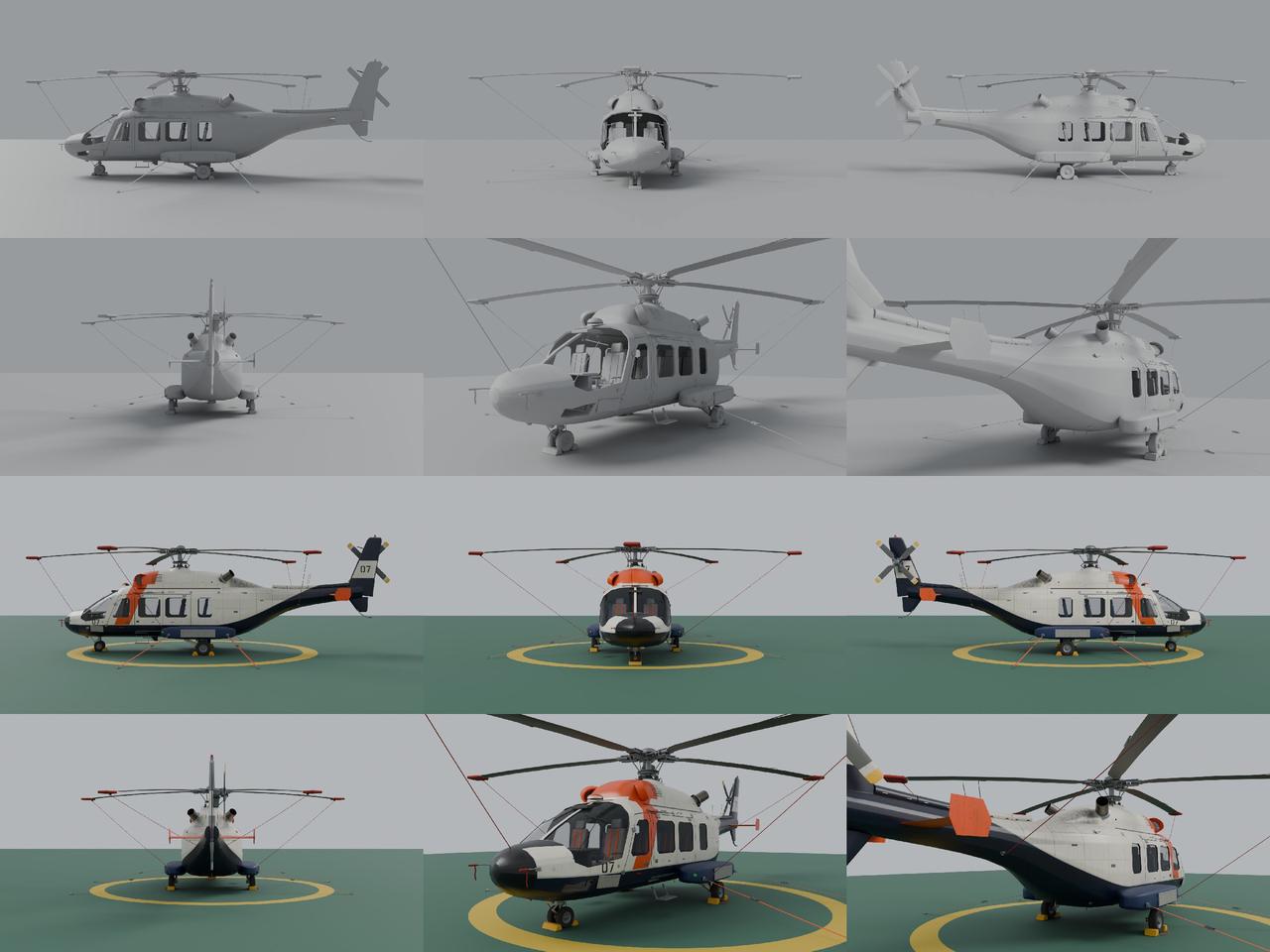
The flagship Stilt walker has 160 parts, a 104-bone rig and three animations. A separate hard-surface study builds a helicopter with 31,477 triangles and three texture sets. The examples also expose failures: some backpack controls interfere with each other, and several models remain simpler than their reference sheets. Source
How It Works
The reference-first route starts with a concept, then generates turnarounds, isolated views and close-ups of each mechanism. A parts plan fixes dimensions, axes, connections and bone assignments before geometry is built. Blender Python creates parts, materials, a rig and actions; matched camera renders reveal discrepancies for another modeling pass. Motion-reference videos guide timing rather than serving as automatically tracked ground truth. Source
Stilt uses segment-aligned bones and mostly rigid one-bone skinning. Limb solvers position connected segments, while hydraulic cylinders and rods aim at opposing anchors. The build samples its authored actions to choose anchor positions with usable strokes and leverage, rejecting configurations where a rod leaves its cylinder. This is an explicit geometric mechanism, not a texture illusion or a learned latent joint. Source Build script
The generated-mesh route treats an image-to-3D result as a visual skin. The agent measures joint locations and rebuilds moving regions around clean axes. A laptop hinge, for example, is exposed through a normalized control and constrained rotation. A checker sweeps the motion range, tests triangle intersections, samples clearance and checks out-of-range clamping. These checks concern the modeled geometry, not manufacturing certification. Source
Blender drivers do not survive glTF export, so the laptop exporter samples controls into skeletal animation actions, including a linear parameter action that an engine can seek. Joint metadata travels as extras. A separate script imports the GLB again and checks nodes, actions and sampled lid positions, testing the delivered file rather than only the authoring scene. Source Reimport check
Applications and Remaining Work
The project is useful as a reproducible workflow for articulated props and technical animation. Its static-prop route separately models silhouette-critical details and bakes smaller surface information into textures. It should not be read as an automatic mechanical CAD solver, a universal rigger or evidence that every asset has been tested in a game. Source Source
The author’s unresolved examples point to control dependencies and specialized soft-goods joint types such as flaps, zippers, fill and straps. These are documented experimental directions, not completed general capabilities. Source
FAQ
Could a V2Fun-generated mesh be used with AnyMachine?
Potentially, as a proposed input asset rather than a verified connector. V2Fun can provide a GLB mesh; AnyMachine’s generated-mesh route still requires measuring joints, separating or rebuilding moving geometry, rigging and validation. A visually convincing mesh does not automatically contain a working hinge. [V2Fun API](https://doc.v2fun.ai/api/core_functions/model-generation) [AnyMachine workflow](https://github.com/apekshik/anymachine/blob/d5e8889eef0b33e0bbe62ddca6f713f94b154b68/PIPELINE.md)
How is this different from V2Fun’s AI 3D Skill?
V2Fun’s Skill combines AI meshes, procedural Three.js geometry and part assembly for model delivery. AnyMachine’s experiments concentrate on articulated mechanisms, parameter controls and checking motion after export. They overlap in asset construction but demonstrate different validation goals; no direct performance comparison is available. [V2Fun Skill](https://github.com/V2Fun-Research/v2fun-ai-3d) [Source](https://github.com/apekshik/anymachine)
Can the animations be used without Blender drivers?
The laptop example bakes driver-controlled movement into glTF animation tracks and reimports the result for inspection. That mechanism works for the exported example; it does not establish that every complex control dependency in the repository has been solved. [Source](https://github.com/apekshik/anymachine/blob/d5e8889eef0b33e0bbe62ddca6f713f94b154b68/laptop/scripts/export.py) [Source](https://github.com/apekshik/anymachine)