Build a Knight Monocycle with GPT-6 Astra and V2Fun
See how GPT-6 Astra and V2Fun turn a knight-on-monocycle concept into a hybrid 3D asset through reference analysis, component decomposition, separate generation, procedural construction, assembly calibration, and GLB export.
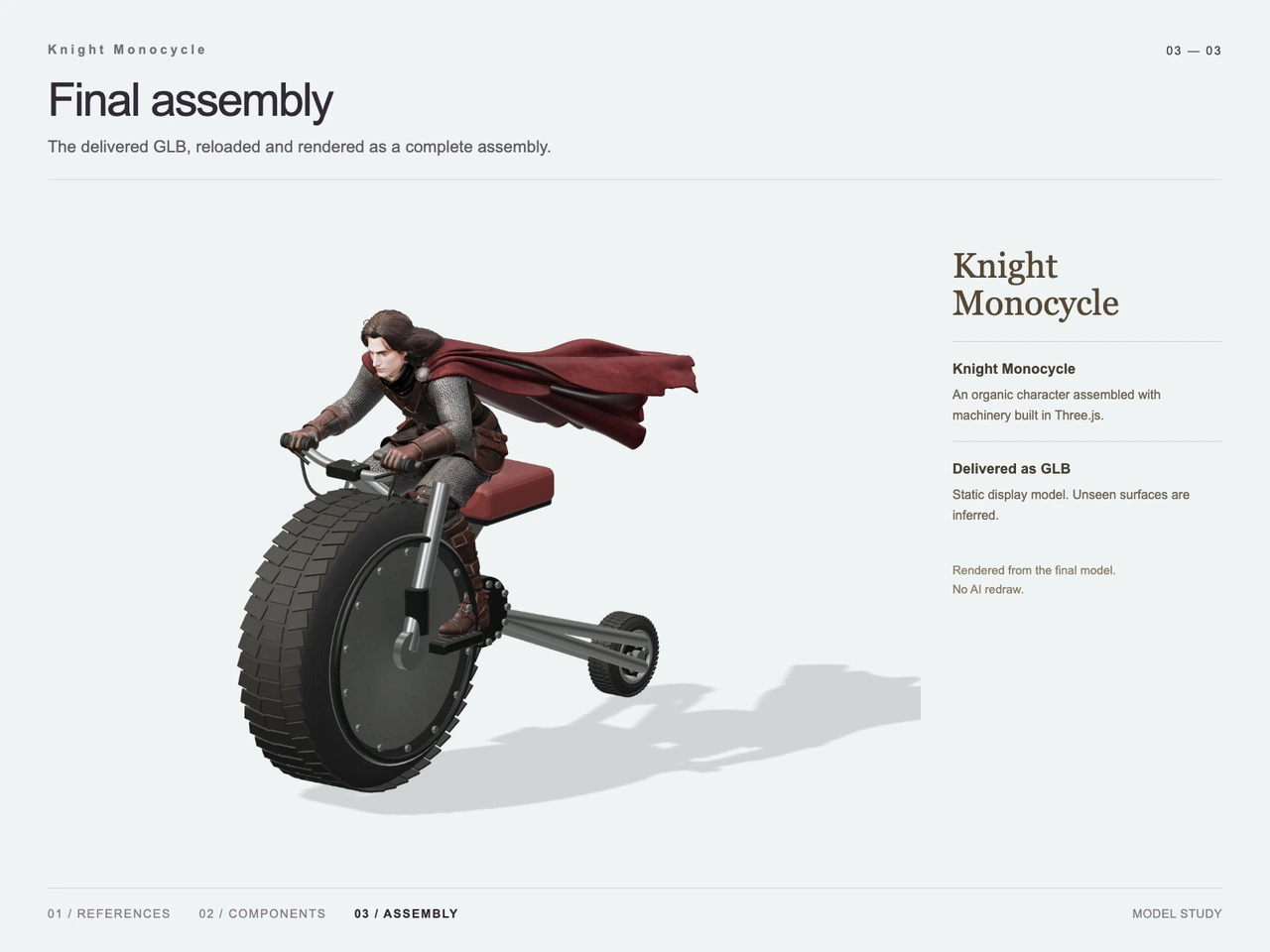
Interactive 3D preview · Build a Knight Monocycle with GPT-6 Astra and V2FunDrag to rotate · Scroll to zoom
Take a Closer Look
-
 01 / Input
Input · Build a Knight Monocycle with GPT-6 Astra and V2Fun
-
 02 / Process
Process · Build a Knight Monocycle with GPT-6 Astra and V2Fun
-
03 / Final
Final · Build a Knight Monocycle with GPT-6 Astra and V2Fun
Overview
This case turns a front three-quarter concept of a long-haired adult knight riding a retro monocycle into a complete 3D display asset. The design combines an organic rider—chainmail, leather gloves, boots, and a dark red cape—with a machine built from a huge front tire, circular side guards, a narrow seat, twin rear beams, and a small support wheel.
The visible study shows a hybrid division of labor. GPT-6 Astra interprets the subject hierarchy, plans the component groups, and coordinates assembly. V2Fun supplies the complex character mesh, while regular mechanical parts are constructed procedurally. This follows the broader GPT-6 Astra and V2Fun model-collaboration workflow.
Tools Used
- GPT-6 Astra: reference interpretation, component planning, spatial reasoning, and assembly calibration.
- V2Fun: generation of the textured knight and clothing as an isolated organic component. The platform's AI 3D model generator covers reference-led asset creation.
- Three.js / procedural construction: regular frame tubes, wheels, circular guards, seat, mechanical equipment, handlebars, supports, and pedals.
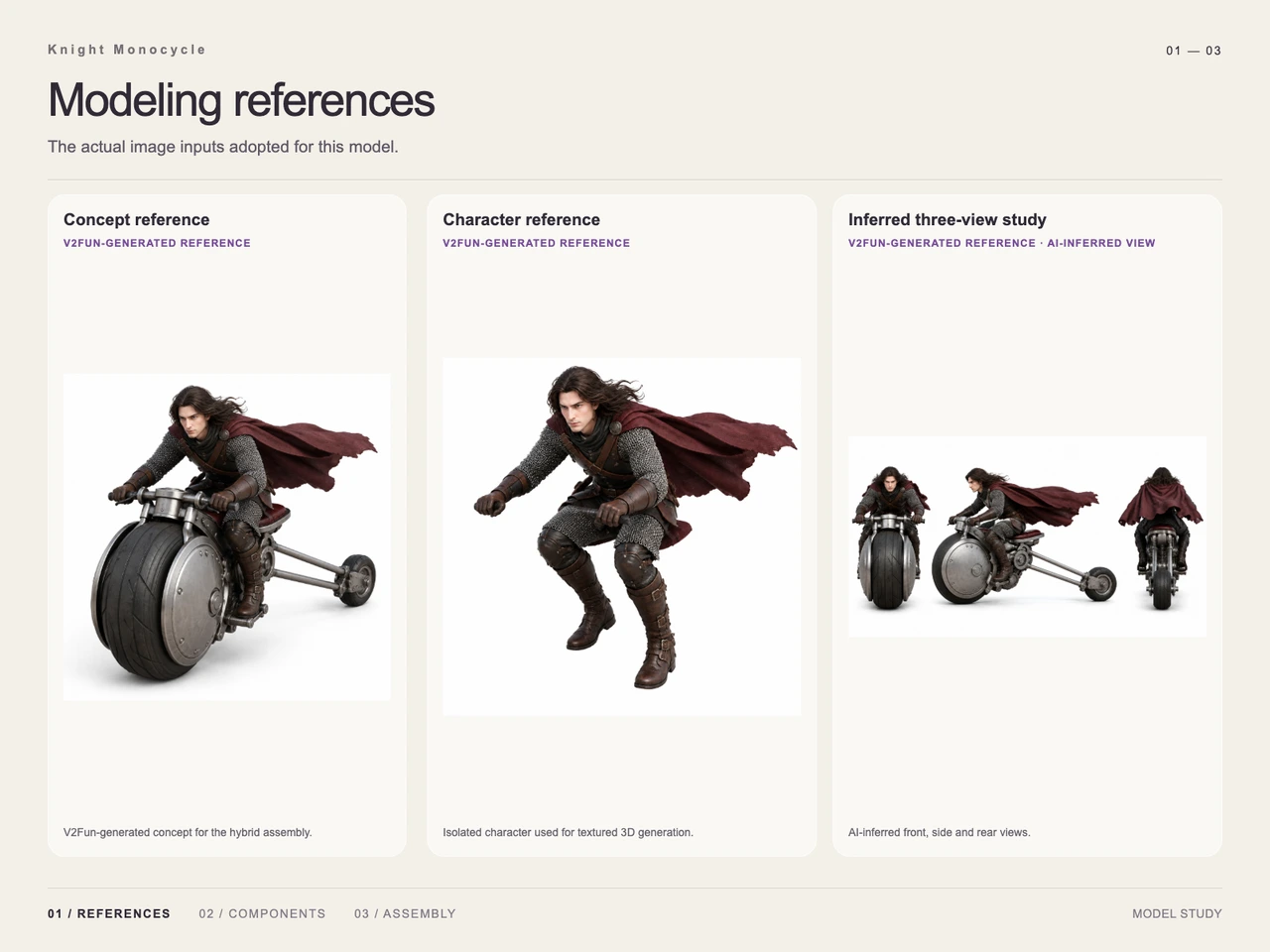
- Visual references: the concept image, isolated character reference, and an AI-inferred front/side/rear study.
- GLB: delivery format for the assembled static model.
Step 1 — Interpret the Design Reference
Astra identifies one rider and one machine as a single composed asset. The concept establishes the forward-leaning pose, hand placement on the short handlebar, foot contact near the supports, trailing cape, oversized front wheel, and long twin-beam rear structure.
Step 2 — Prepare Character and View References
The rider is isolated from the vehicle so the organic form can be generated separately without losing the crouched riding pose. An inferred three-view study supplies additional front, side, and rear cues for the unusual vehicle silhouette. Such inferred views remain estimates rather than measured reconstruction; the multi-view 3D modeling workflow explains the related input approach.
Step 3 — Decompose the Asset
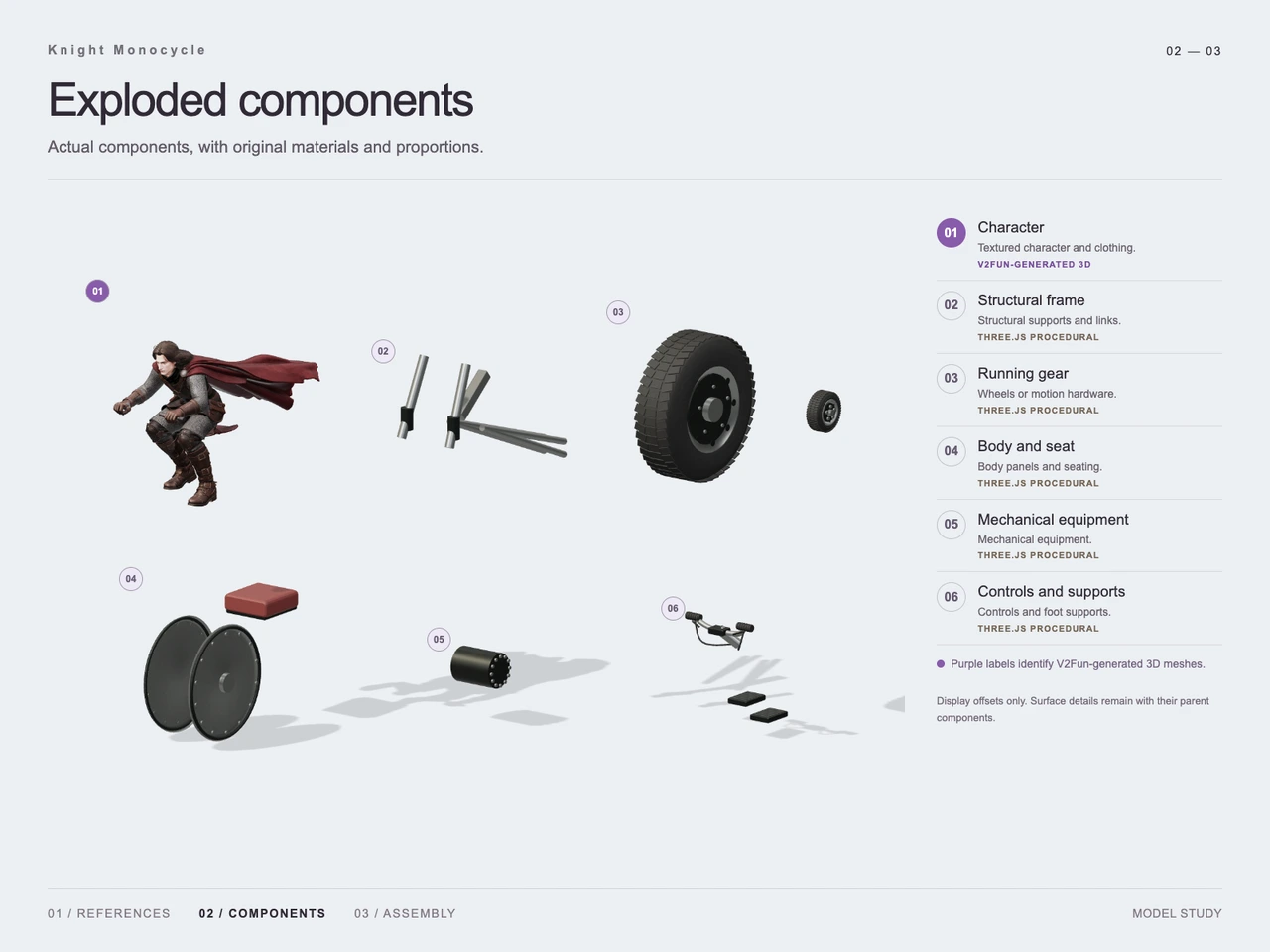
The exploded study organizes the build into six visible groups: character, structural frame, running gear, body and seat, mechanical equipment, and controls and supports. This separation makes the large tire, small rear wheel, twin rails, circular panels, saddle, handlebar, and pedals individually positionable during assembly.
Step 4 — Generate the Organic Component
V2Fun generates the textured knight and clothing, preserving the visible riding posture, long hair, chainmail-like clothing, leather equipment, boots, and swept-back cape. The evidence supports generation of this character component but does not establish rigging, animation, topology, UV, or deformation quality.
Step 5 — Construct the Regular Mechanical Parts
The process image labels the remaining groups as Three.js procedural components. Tubes, rods, discs, wheels, rectangular plates, the seat, handlebar, and foot supports are suited to direct construction because their forms and connections can be expressed with regular geometry.
Step 6 — Calibrate and Assemble
The generated rider and procedural machinery are brought together by adjusting their relative position, scale, and orientation. The final render shows the hands aligned with the controls, the rider seated above the main wheel, the boots near the mechanical and support area, and the cape kept clear enough to leave the principal structure visible.
Workflow
Concept reference → Isolate character → Infer additional views → Plan component groups → Generate organic rider with V2Fun → Build regular machinery procedurally → Calibrate contacts and proportions → Assemble → Render and export GLB
Prompt
Create a complete standalone collectible-style asset of a long-haired adult knight leaning forward while riding a retro monocycle. The rider wears chainmail-backed clothing, leather gloves, and a short dark red cape. The machine has one enormous wide front tire with circular metal guards on both sides, a short handlebar, a narrow saddle, two parallel rear beams, and a small support wheel. Construct it from clear discs, tubes, rectangular brackets, straight rods, and a few regular curved tubes, using silver-gray metal and a dark red seat. Preserve contact between the rider, seat, grips, and foot supports. Show the entire subject from a slightly elevated front three-quarter view on a white background with soft studio lighting, contact shadows, and all parts in focus. Exclude text, numbers, logos, watermarks, complex scenery, motion blur, collages, and exploded views.
Result
The delivered result is 87-v2-final.glb, a model/gltf-binary file containing the assembled static knight-monocycle model. File size: 47,447,820 bytes (approximately 45.25 MiB).
The final image is presented as a render reloaded from the delivered model rather than an AI-redrawn illustration. It visibly preserves the central design relationships: the crouched knight, trailing cape, dominant front wheel, circular side guard, red saddle, long rear beams, and small support wheel. No claim is made here about topology, UVs, polygon count, rigging, animation, physical dimensions, printability, engine readiness, or commercial rights. For downstream delivery decisions, see the FBX, GLB, OBJ, and USDZ export guide.
Frequently Asked Questions
What was created in this GPT-6 Astra and V2Fun case?
The case produced a static GLB asset showing a long-haired knight in a forward riding pose on a retro monocycle with an oversized front wheel, circular side guard, narrow red seat, twin rear beams, and a small support wheel.
How was the knight monocycle divided into components?
The exploded study shows six groups: character, structural frame, running gear, body and seat, mechanical equipment, and controls and supports.
Which part was generated with V2Fun?
The process evidence labels the textured knight and clothing as the V2Fun-generated 3D component. The regular mechanical groups are labeled as procedurally constructed with Three.js.
Why were additional views inferred from the concept?
Front, side, and rear studies provide extra cues about the vehicle's depth, rear beams, wheel placement, and rider relationship. Because these views were inferred rather than photographed or measured, they should be treated as modeling guidance rather than exact evidence.
What GLB file was delivered?
The delivered file is 87-v2-final.glb, with MIME type model/gltf-binary and a supplied size of 47,447,820 bytes, or approximately 45.25 MiB.
Is the knight monocycle proven ready for animation, games, or 3D printing?
No. The supplied evidence demonstrates a static assembled model and rendered appearance, but it does not prove rigging, animation behavior, topology or UV quality, runtime performance, physical dimensions, or printability.
Explore More
-
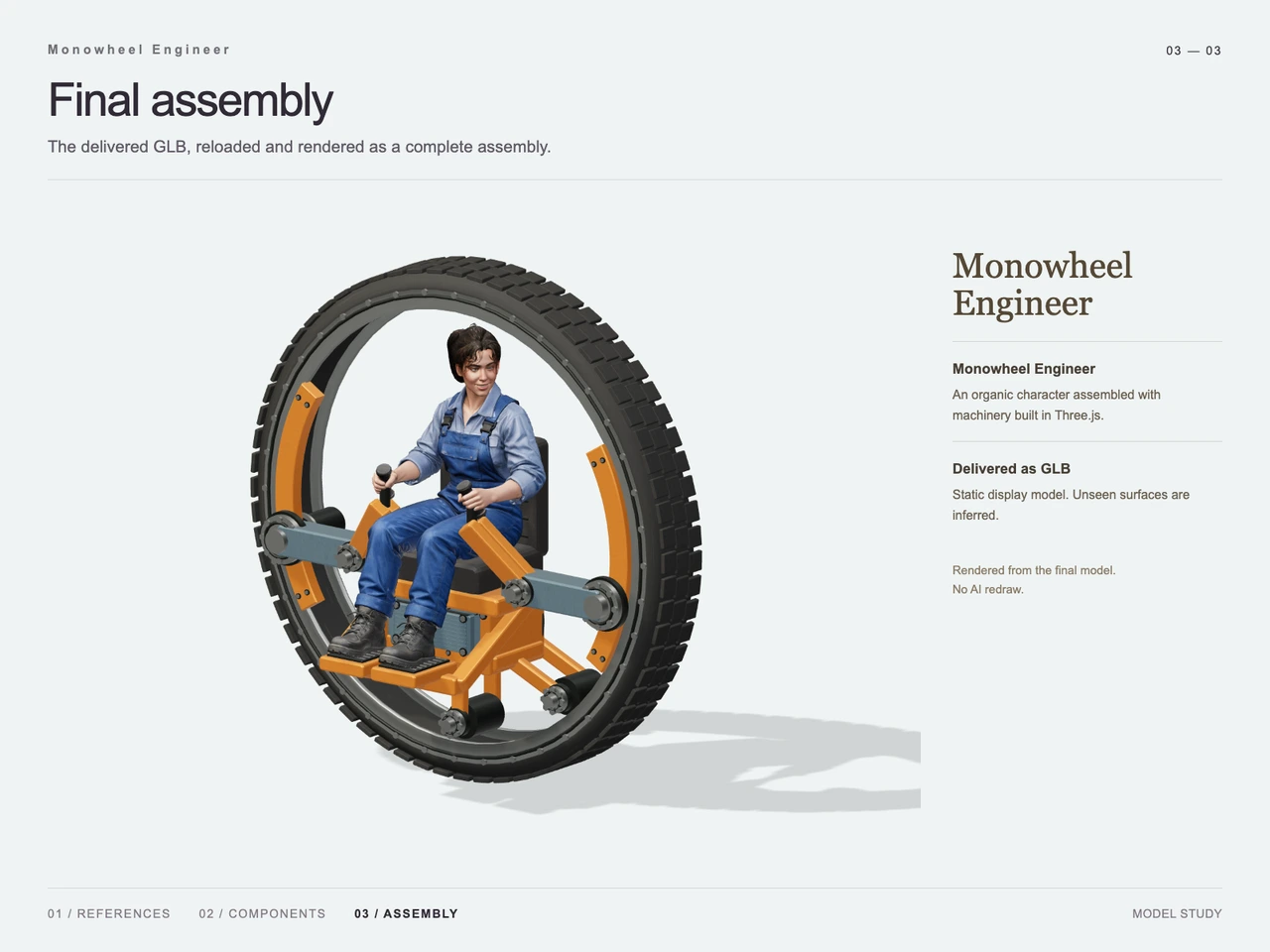
GPT-6 Astra x V2Fun - From Code Generation to Model Collaboration | V2Fun
See how GPT-6 Astra and V2Fun combine agent reasoning, code generation, and AI 3D foundation models to build complex, structured 3D assets.
View page → -
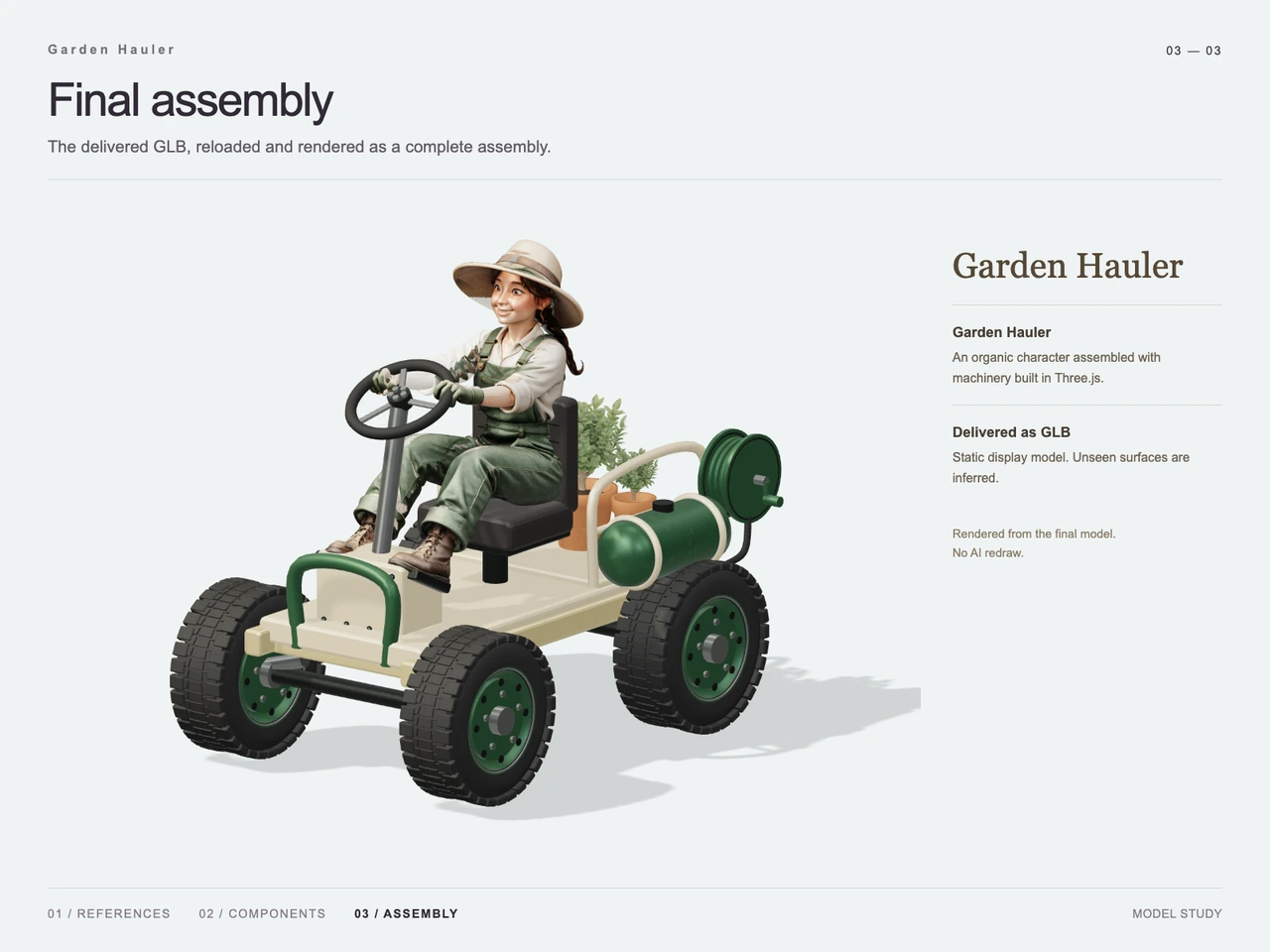
V2Fun - AI 3D Model Generator
Create 3D models from text prompts or images with V2Fun's AI 3D model generator. Generate characters, props, game assets, and 3D-printable models faster.
View page → -
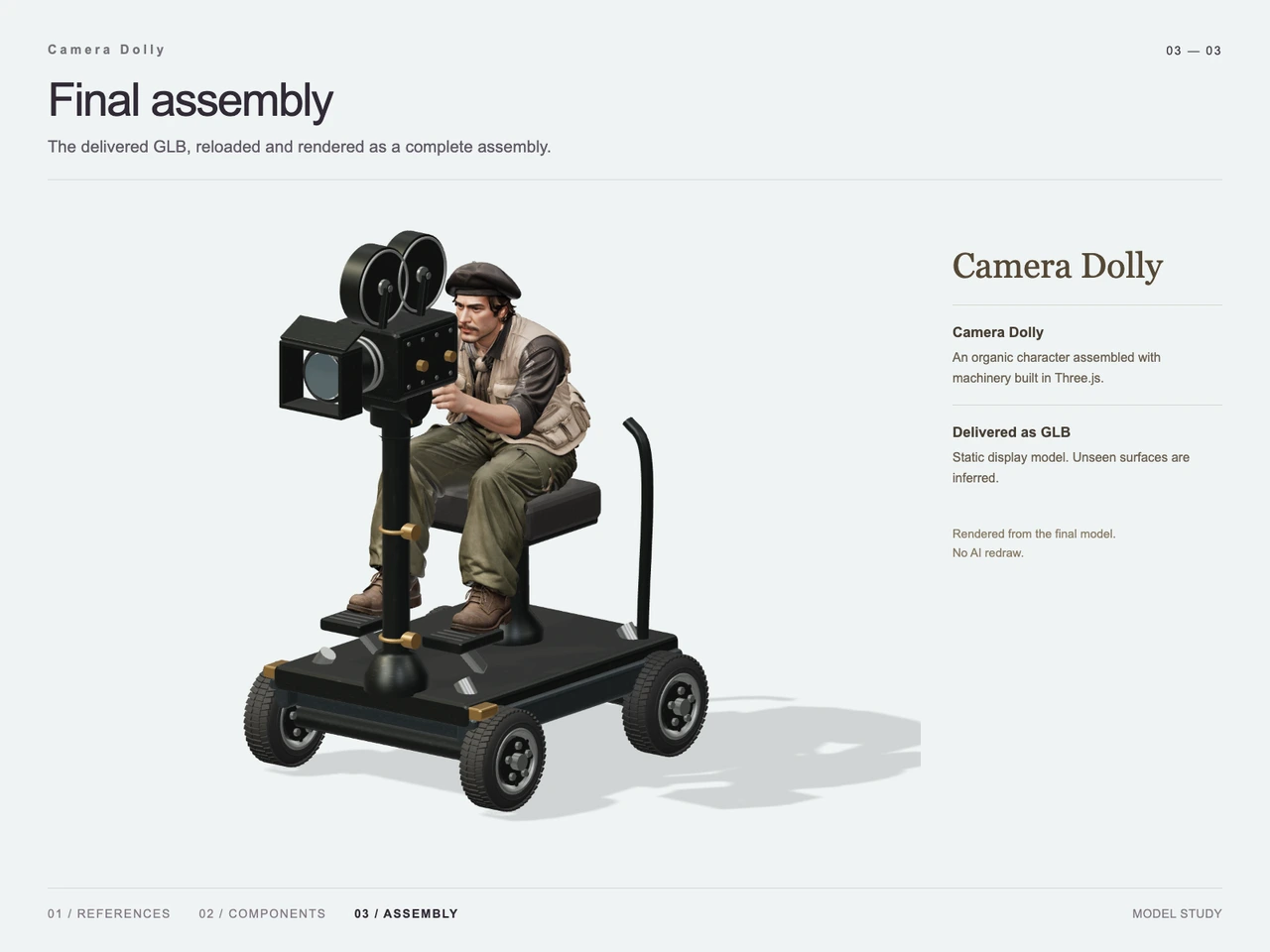
V2Fun - Multi-View to 3D Model AI
Generate accurate 3D models from multiple reference images with V2Fun's multi-view to 3D model AI. Create structured assets with better shape consistency and detail.
View page → -
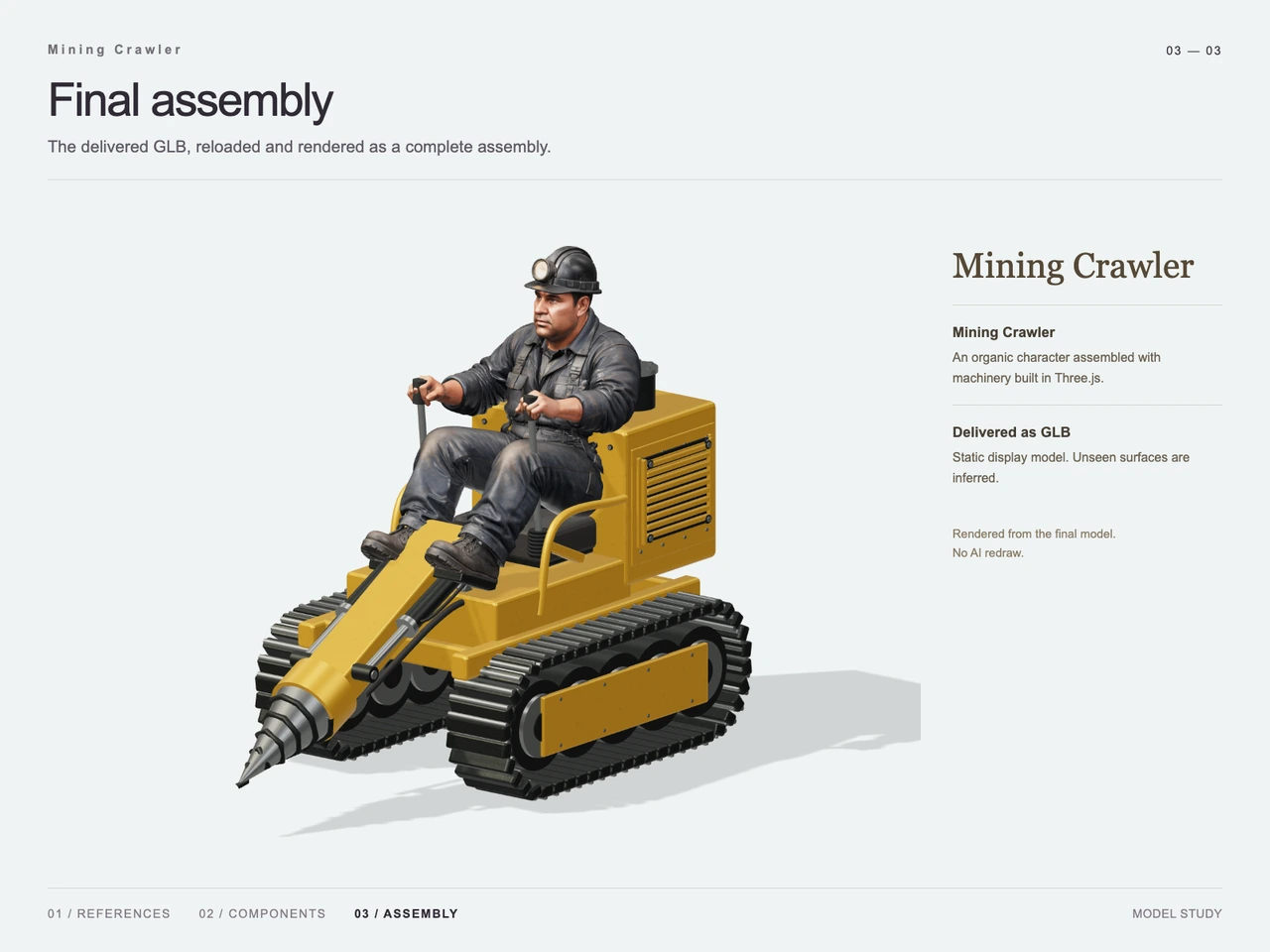
AI 3D Model Generator Export Guide: FBX, GLB, OBJ, or USDZ? | V2Fun
Use an AI 3D Model Generator with the right export format. Compare FBX, GLB, OBJ, and USDZ for Blender, game engines, animation, web, and AR.
View page →